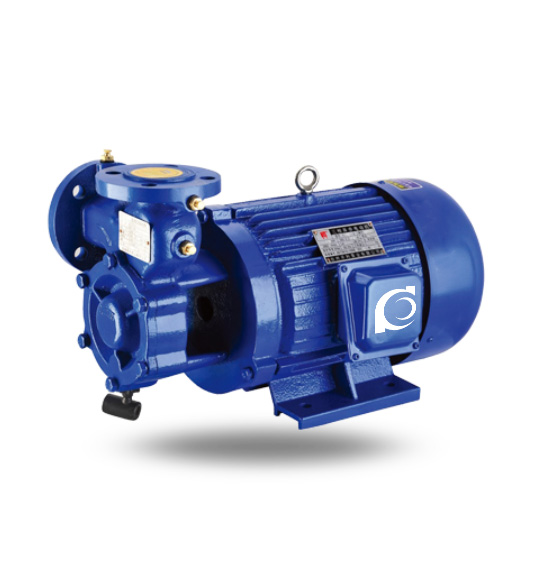
Product Overview
The 1W Series is a single-stage, close-coupled vortex pump with a simple and compact structure design. It offers stable and reliable performance, easy maintenance, and a small footprint. The pump is available in cast iron or stainless steel materials.
Model Designation

Key Features
-
Compact Design: Single-stage vortex pump structure, low size and lightweight, easy to install and operate.
-
Low Noise Operation: Smooth and reliable operation with low noise.
-
Convenient Maintenance: Simplified daily maintenance and reduced service workload.
-
High Applicability: Suitable for handling harsh media such as acids, alkalis, oils, toxic/volatile substances, as well as in recirculating water systems and filtration systems.
-
High Safety: Especially suitable for applications that require strict attention to leakage risks, flammability, or explosiveness.
Engineering Overview
The 1W Series pump uses a close-coupled (direct coupling) configuration for single-stage vortex suction. This design emphasizes operational stability and practicality, with performance that is superior to other domestic products in the same category. The vortex impeller design enhances fluid flow stability, achieving low flow and high head performance.
Typical Applications
The 1W Series pump is widely used in:
-
Small Boiler Feedwater Pumps: Provides stable boiler feedwater flow.
-
Shipbuilding, Textile, and Chemical Industries: For various industrial liquid transfer applications.
-
Metallurgy and Mechanical Manufacturing: For cooling and fluid circulation in the metallurgy and mechanical industries.
-
Aquaculture: Provides water circulation and oxygenation for aquaculture systems.
-
Fixed Firefighting Pressure Boosting: Ensures reliable water pressure in firefighting systems.
-
Heat Exchanger Systems: For fluid transfer in hot water circulation and cooling systems.
-
Long-Distance Agricultural Irrigation: Supports long-distance agricultural irrigation systems.
System Configuration
The 1W Series is a single-stage, close-coupled pump unit, where the pump hydraulic system and drive system are integrated using a direct coupling layout. Wetted materials available: cast iron or stainless steel.
Components and Supply
-
Motor: High-efficiency motor providing stable performance.
-
Vortex Impeller: Precisely designed impeller for efficient fluid propulsion.
-
Installation System: Simplifies installation and optimizes space usage.
-
Seal System: Offers both packing gland and mechanical seal options to suit various operating conditions.
Technical Service
-
24/7 customer service and technical support available.
-
Regular maintenance and inspection services to ensure optimal pump performance.
-
Customized solutions based on customer requirements, optimizing pump system configuration and performance.
Operating Conditions
-
Medium Type: Clean water or liquids with similar properties to water.
-
Operating Temperature: Suitable for temperatures ranging from -20°C to +60°C (maximum temperature not exceeding 60°C).
-
Viscosity: ≤5E.
Service Conditions
-
Regular inspection of sealing performance to ensure no leakage.
-
Periodic tightening of all components to ensure the stability and safety of the equipment.
-
Avoid dry running to ensure proper lubrication and cooling.
Protection Features
-
Overload Protection: Prevents pump damage during overload operation.
-
Temperature Control Protection: The motor automatically stops if the temperature exceeds preset limits.
-
Low Liquid Level Protection: Automatically detects liquid levels to avoid dry running.
Selection Criteria
When selecting the 1W Series vortex pump, consider the following criteria:
-
Medium Type: Choose the appropriate pump based on the characteristics of the medium being conveyed.
-
Installation Environment: Select a model suitable for the available installation space and environmental conditions.
-
Flow and Head Requirements: Choose the appropriate flow and head based on process requirements.
-
Energy Efficiency: Choose energy-efficient pumps to reduce operating costs.
Specifications & Installation
Outline Drawing

Performance Data
| 1 | Motor shaft extension | 9 | Inner partition plate | |
| 2 | Motor | 10 | Pin | |
| 3 | Pump casing | 11 | Inner partition plate | |
| 4 | Shaft collar | 12 | Impeller | |
| 5 | Water-deflector ring | 13 | Coupling shaft | |
| 6 | Key | 14 | Impeller key | |
| 7 | Gland | 15 | Profiled seal ring | |
| 8 | Flexible graphite packing | 16 | Pump cover | |
| The 1W series vortex pump adopts a direct-coupled configuration between pump and motor, with the suction nozzle arranged horizontally and the discharge nozzle vertically upward. Viewed from the pump end, the pump rotates counterclockwise. The impeller can slide freely on the cantilever shaft so that it can automatically adjust the clearance on both sides during operation. The outer partition plate can be removed together with the impeller by means of two threaded holes on the impeller. The impeller and inner partition plate are made of 9-4 aluminum bronze, the shaft is made of stainless steel, and the packing uses a new sealing material — flexible graphite. This design ensures stable performance, simple construction and convenient dismantling. | ||||
Performance Parameters
| Model |
Flow Rate
(m3/h) |
Head
(m) |
Speed
(r/min) |
Power
(kW) |
| 1W2.4-10.5 (single-stage) | 2.4 | 105 | 2900 | 3 |
| 1W2.5-12 (single-stage) | 2.5 | 120 | 2900 | 3 |
| 25W-25 (single-stage) | 1.44 | 25 | 2900 | 0.75 |
| 32W-30 (single-stage) | 2.88 | 30 | 2900 | 1.5 |
| 32W-75 (single-stage) | 2.88 | 75 | 2900 | 4 |
| 40W-40 (single-stage) | 5.4 | 40 | 2900 | 4 |
| 40W-90 (single-stage) | 5.4 | 90 | 2900 | 7.5 |
| 50W-45 (single-stage) | 9 | 45 | 2900 | 5.5 |
| 65W-50 (single-stage) | 14.4 | 50 | 2900 | 11 |
| 1.58D-0.7 (single-stage) | 2.4 | 105 | 1450 | 3 |
Operating Manual
Precautions
-
Before start-up, the pump casing and suction pipeline must be completely filled with liquid. Never start or run the pump when it is dry, as this may cause seizing and serious damage.
-
The discharge valve must be opened before starting to reduce the starting load on the motor. The pump must never be operated with the discharge valve fully closed.
-
The pumped liquid must not contain solid particles or debris, to avoid damage to the impeller caused by foreign matter entering the pump.
-
Stuffing box leakage should be maintained at a normal rate, typically drip by drip.
-
During overhaul, in addition to replacing worn parts, the bearings of the matching motor should generally also be replaced.
-
When continuous operation is required at a flow rate lower than the rated value, a bypass line should be used to recirculate part of the flow from the discharge side back to the suction side, controlled by a valve (with the discharge valve fully open). Do not simply throttle the discharge valve directly, to avoid running the motor in an overloaded condition.
Operation & Running
-
For W series pump sets with separate bearing housings, first check whether the bearing housing contains adequate calcium-based grease. If the pump has been stored for a long time, remove the bearing end cover to check whether the grease has deteriorated. If deterioration is found, replace the grease before starting.
-
Rotate the coupling by hand (for direct-coupled pumps, remove the motor fan cover and rotate the fan) to confirm that the rotating assembly moves smoothly and evenly. Then use a spirit level to check the levelness of the pump set. After leveling, tighten the foundation bolts appropriately.
-
Measure the motor insulation resistance. If it is lower than 5 MΩ, the motor may be damp or damaged. If it is only damp, the insulation can usually be restored after running the motor for a period of time; otherwise, the motor must be repaired or replaced to avoid damage to the pump caused by faulty operation.
-
Perform a test start: jog the motor and adjust the wiring to ensure that the rotation direction matches the specified direction.
-
Open the suction valve and prime the pump casing. For pumps installed above the liquid level, a foot valve can be installed at the end of the suction pipe. Before start-up, fill the pump casing with the liquid being pumped. (For short suction lines, only the first start requires priming; thereafter, the residual liquid in the casing will generally be sufficient.)
-
Open the discharge valve, start the motor and observe the pressure gauge. Adjust the valve opening on the discharge line to obtain the appropriate pressure reading. The pump must not be operated with the discharge valve closed or at extremely low flow.
-
For shutdown, first close the pressure gauge valve, stop the motor, and then promptly close the discharge and suction valves.
-
For short shutdowns, if the ambient temperature is lower than the freezing point of the liquid, drain the liquid from the pump. For long-term shutdown, flush the pump, apply a light protective oil film, and store it properly.
Operation & Running
-
During operation, closely monitor the running status of the pump set, especially by checking whether the motor surface temperature is excessively high. For split-type pumps, also ensure that the bearing temperature does not exceed 70°C. If the motor overheats, check whether the pipeline is blocked or a valve is not fully open, causing excessive internal pressure. If the bearings overheat, check whether the amount of calcium-based grease is appropriate, whether the bearings are damaged, or whether there is misalignment between motor and pump.
-
If any abnormality or fault is detected, stop the pump immediately and investigate the cause before restarting.
OEM & Custom
We support OEM branding, custom materials (stainless steel/cast iron), high-head customization, application-specific modifications, customized voltage/frequency, and export-oriented packaging solutions for distributors and equipment manufacturers.
FAQs
- 1. What materials are available for the 1W vortex pump?
Stainless steel and cast iron options are available depending on chemical compatibility and application requirements. - 2. Can the pump handle acidic or alkaline liquids?
Yes. The pump is suitable for acid, alkali, oil, volatile and special liquids when matched with appropriate materials. - 3. What is the maximum working temperature?
The recommended liquid temperature is ≤60°C for optimal performance and service life. - 4. Do you offer OEM branding for export?
Yes. We provide logo printing, nameplate customization, export packaging and long-term supply support. - 5. Is the pump suitable for boiler feed applications?
Yes. The 1W vortex pump is commonly used in small boiler feed systems and circulation equipment. - 6. What power supply standards are supported?
Standard models use 2900 rpm (50Hz). Custom voltage, 60Hz versions, and special motors are available. - 7. How do you ensure product quality for overseas shipments?
Each pump undergoes performance testing, material inspection, and packaging reinforcement to ensure safe international delivery.