Article Content
Product Overview
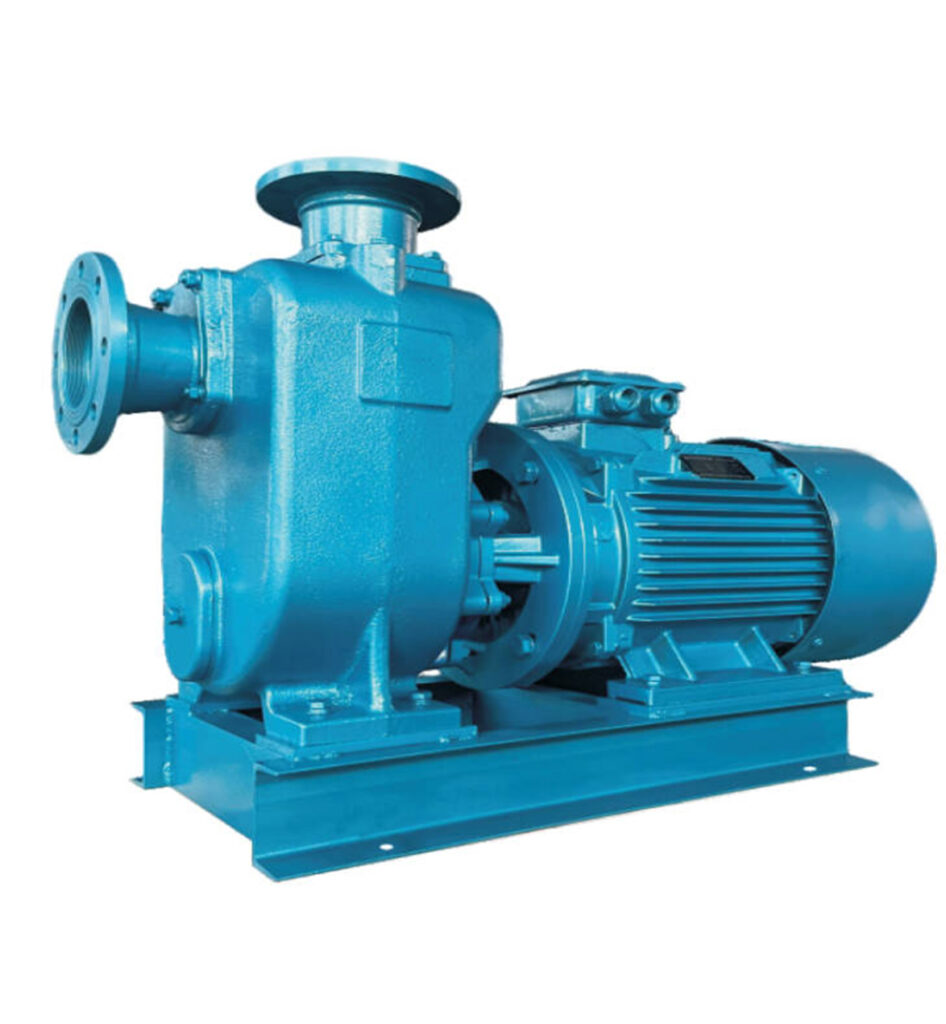
The BZ series self-priming centrifugal pump is an advanced clean-water pump developed with innovative hydraulic design. It combines compact structure, strong suction, and reliable performance. The pump integrates impeller, mechanical seal, gas-liquid separator, and base into one unit, ensuring efficient self-priming and continuous operation. It eliminates the need for a foot valve or pre-filling water during startup, simplifying installation and maintenance. The BZ pump is suitable for clean water and other liquids similar to water in physical and chemical properties, with low viscosity and minimal impurities.
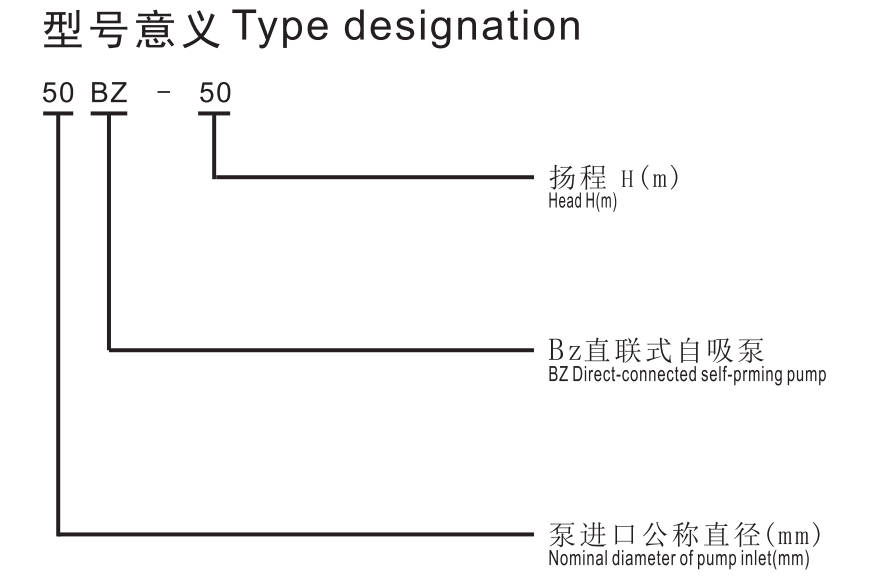
BZ Series Type Designation
Scope of Application
1. Ambient temperature ≤ 40°C, medium temperature ≤ 80°C; optional high-temperature type up to 120°C.
2. Suitable for clean water or liquids with similar properties.
3. Medium pH range: 6–9 for cast iron, 2–13 for stainless steel.
4. Used in municipal water supply, factory water systems, construction drainage, and agricultural irrigation.
5. Ideal for water circulation, boiler feed, and general industrial liquid transfer.
Main Components
(Product image)
The main components include:
1. Motor 2. Impeller 3. Mechanical Seal 4. Pump Shaft 5. Pump Body 6. Gas-Liquid Separator 7. Check Valve 8. Water Valve 9. Inlet and Outlet Interfaces 10. Base 11. Drain Plug.
Working Principle and Structure Description
The BZ self-priming centrifugal pump operates by storing a certain amount of liquid in the pump chamber before starting. When the impeller rotates, air in the suction line mixes with the stored liquid to form a gas-liquid mixture. The mixture is expelled through the discharge port while air is separated in the gas-liquid chamber. This process creates a vacuum that draws water into the pump, completing the self-priming cycle. Once water fills the suction line, the pump works as a standard centrifugal pump. The system automatically maintains liquid in the chamber after shutdown, enabling quick re-start without refilling.
Performance Parameters
(Performance table)
The BZ series covers flow rates from 3 to 400 m³/h, head from 8 to 50 m, power 0.75–90 kW, and speeds of 1450–2900 r/min. Efficiency ranges between 45–70%, depending on model size. Standard voltages include 380V/50Hz, with optional 220V or 415V versions available.
Pump Installation
1. Ensure the foundation is level, stable, and free of vibration.
2. For direct-coupled types, maintain coaxial alignment between motor and pump shafts.
3. The suction pipe should be short and airtight; avoid sharp bends or leakage points.
4. For long suction pipes, install a check valve near the pump inlet.
5. During installation, fill the pump with clean water up to 2/3 of the chamber volume.
6. After running, check for vibration or abnormal sound and adjust alignment if needed.
7. Avoid long-term dry running or overload operation.
Use of Pumps
1. Before startup, ensure all bolts and fasteners are tight and bearings lubricated.
2. Verify the rotation direction matches the arrow on the pump body.
3. Open the outlet valve slightly and start the motor; once speed stabilizes, gradually open the outlet valve.
4. During operation, monitor bearing temperature (<80°C) and mechanical seal for leakage.
5. When stopping, close the outlet valve first, then shut off the power supply.
6. For long-term storage, drain remaining water and protect pump surfaces from corrosion.
7. Cooling water for the bearing seat should flow steadily and remain clean.
8. After six months of operation, inspect the mechanical seal and replace oil or seals as required.
Maintenance and Disassembly
1. The pump features a simple and compact structure requiring minimal maintenance.
2. Bearings should be replaced or greased if noise or vibration occurs.
3. The mechanical seal should be inspected regularly; replace it if leakage is detected.
4. When reassembling, ensure the O-ring and gasket surfaces are clean and properly seated.
5. For long downtime, disassemble, clean, and store in a dry environment.
6. After reinstallation, confirm alignment accuracy and check for leaks during test operation.
Troubleshooting
Problem: Pump not discharging water
Cause: Air leakage or insufficient water storage.
Solution: Add water, tighten pipe joints, and seal air leaks.
Problem: Low flow or low head
Cause: Impeller wear or blockage.
Solution: Clean, repair, or replace impeller.
Problem: Excessive noise or vibration
Cause: Shaft misalignment or bearing wear.
Solution: Realign motor and pump, replace bearings.
Problem: Bearing overheating
Cause: Insufficient lubrication or excessive load.
Solution: Add grease or reduce flow resistance.
Problem: Mechanical seal leakage
Cause: Worn or damaged seal faces.
Solution: Replace seal and inspect shaft surface.
OEM & Custom Solutions
We provide full OEM/ODM customization services, including stainless steel construction, special voltages (220/415/460V), explosion-proof motors, and control cabinets. Custom labeling, packaging, and flange standards (DIN/ANSI/JIS) are supported. Each pump is hydraulically tested and certified to ISO9001 and CE export standards, ensuring reliability for global water supply and industrial systems.
FAQs for Oversea Buyers
Q: What is the main application of the BZ self-priming pump?
A: It’s designed for clean water and non-corrosive liquids used in municipal, agricultural, and industrial water transfer systems.
Q: Does it need priming before startup?
A: No, the BZ pump self-primes automatically once filled initially; no foot valve is required.
Q: What materials are available?
A: Standard cast iron and optional stainless steel (BZL type) are available for corrosive or sanitary fluids.
Q: What is the maximum suction height?
A: Up to 5 meters, depending on installation and liquid type.
Q: How is the pump maintained?
A: Periodic bearing lubrication and seal inspection are sufficient for long-term reliability.
Q: Can it operate continuously?
A: Yes, designed for continuous operation with low noise and vibration.
Q: What export markets use this pump?
A: The BZ series is widely used in Southeast Asia, the Middle East, and Africa for municipal, industrial, and irrigation systems.