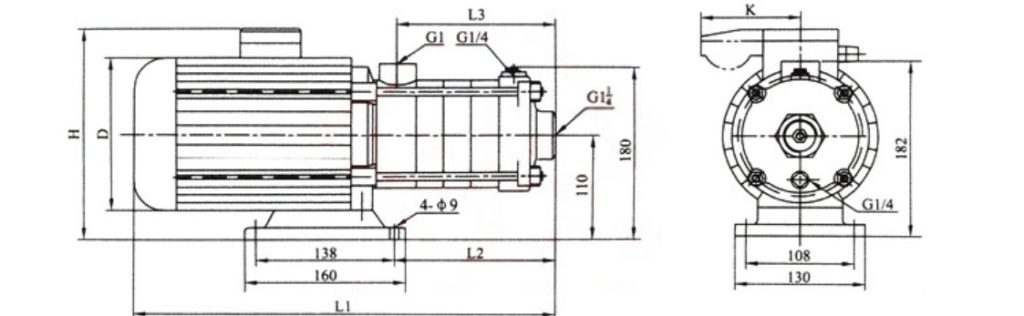
Article Content
CDL/CDLF Vertical Multistage Pump
Complete Troubleshooting & Diagnostic Guide
🔍 Quick Diagnostic Table
Use this table to quickly identify common problems and solutions.
1. Pump Not Discharging Water
1.1 Possible Causes
| Cause | Probability | Check Method |
|---|---|---|
| No priming water | High | Visual inspection |
| Air in suction line | High | Listen for air sounds |
| Incorrect rotation | Medium | Check motor direction |
| Suction lift too high | Medium | Measure vertical distance |
| Clogged impeller | Low | Disassemble and inspect |
1.2 Solutions
For No Priming Water:
- Stop pump immediately
- Fill pump chamber completely with water
- Open vent valve to release trapped air
- Restart pump
For Air Leaks:
- Check all suction pipe joints
- Apply thread sealant or replace gaskets
- Tighten connections to proper torque
- Test with soap solution for bubble detection
2. Insufficient Flow or Head
2.1 Diagnostic Steps
- Check discharge pressure gauge – Compare with performance curve
- Measure motor current – Low current indicates low load
- Inspect suction strainer – Clean if clogged
- Check valve positions – Ensure fully open
- Verify pump speed – Should match nameplate RPM
2.2 Common Causes & Remedies
| Symptom | Cause | Remedy |
|---|---|---|
| Low pressure | Worn impellers | Replace impeller assembly |
| Low flow | Clogged diffuser | Clean or replace diffuser |
| Both low | Wrong rotation | Reverse any two power leads |
| Fluctuating | Air in system | Bleed air from piping |
3. Excessive Vibration or Noise
3.1 Vibration Analysis
| Vibration Level | Status | Action |
|---|---|---|
| 0-2.8 mm/s | Excellent | No action needed |
| 2.8-4.5 mm/s | Good | Monitor trend |
| 4.5-7.1 mm/s | Acceptable | Plan maintenance |
| 7.1-11.2 mm/s | Poor | Schedule repair |
| >11.2 mm/s | Unacceptable | Stop immediately |
3.2 Noise Diagnosis
High-Pitched Squeal:
- ✓ Cavitation – Check NPSH available vs required
- ✓ Dry running – Verify priming water
Grinding Noise:
- ✓ Bearing failure – Replace bearings
- ✓ Impeller rubbing – Check alignment and wear rings
Knocking Sound:
- ✓ Loose foundation bolts – Retighten
- ✓ Pipe resonance – Add pipe supports
4. Motor Overheating
4.1 Temperature Limits
| Insulation Class | Max Temperature | Rise Limit |
|---|---|---|
| Class B | 130°C | 80K |
| Class F | 155°C | 105K |
| Class H | 180°C | 125K |
4.2 Troubleshooting Steps
- Check ventilation – Clean motor cooling fins
- Measure voltage – Should be ±10% of rated
- Check current balance – Phase imbalance <5%
- Verify load – Compare with pump curve
- Check ambient temperature – Must be ≤40°C
5. Mechanical Seal Leakage
5.1 Leakage Classification
| Leakage Rate | Status | Action |
|---|---|---|
| No visible leakage | Excellent | Continue operation |
| <3 drops/min | Acceptable | Monitor |
| 3-10 drops/min | Warning | Plan replacement |
| >10 drops/min | Critical | Stop and replace |
| Continuous stream | Failure | Immediate shutdown |
5.2 Common Seal Failures
Face Wear:
- Cause: Abrasive particles in liquid
- Solution: Install filtration, upgrade seal material
O-Ring Hardening:
- Cause: High temperature or chemical attack
- Solution: Use compatible elastomer, reduce temperature
Spring Corrosion:
- Cause: Corrosive medium
- Solution: Use stainless steel or Hastelloy springs
6. Bearing Failure
6.1 Bearing Life Expectancy
L10 Life = (C/P)³ × 1,000,000 revolutions
- Normal life: 25,000-50,000 hours
- Premature failure indicators: Noise, heat, vibration
6.2 Failure Analysis
| Failure Pattern | Cause | Prevention |
|---|---|---|
| Spalling | Fatigue overload | Reduce load, proper sizing |
| Brinelling | Static overload | Proper handling during install |
| Peeling | Insufficient lubrication | Regular grease replacement |
| Rust | Water contamination | Improve sealing |
7. Cavitation Damage
7.1 NPSH Calculation
NPSHa = Ha ± Hz – Hf – Hvp
- Ha = Atmospheric pressure head
- Hz = Static suction head (positive or negative)
- Hf = Friction loss in suction line
- Hvp = Vapor pressure of liquid
7.2 Cavitation Symptoms
- ✓ Noise like gravel in pump
- ✓ Vibration increase
- ✓ Head and flow reduction
- ✓ Pitting on impeller vanes
8. Performance Testing
8.1 Test Parameters
| Parameter | Measurement Tool | Frequency |
|---|---|---|
| Flow rate | Flow meter | Quarterly |
| Head | Pressure gauges | Quarterly |
| Power | Power analyzer | Quarterly |
| Efficiency | Calculated | Quarterly |
| Vibration | Vibration analyzer | Monthly |
9. Emergency Procedures
Immediate Shutdown Required When:
- Severe leakage detected
- Abnormal noise or vibration
- Motor temperature exceeds limit
- Smoke or burning smell
- Electrical fault indication
10. Documentation & Records
Maintain troubleshooting log with:
- Date and time of issue
- Symptoms observed
- Diagnostic steps taken
- Root cause identified
- Corrective action performed
- Technician name
11. Technical Support
Shanghai Chaodun Machinery Manufacturing Group Co., Ltd.
Website: https://cd-pump.com