Article Content
CHDF Horizontal Multistage Stainless Steel Pump
Comprehensive Maintenance & Reliability Program Technical Guide
Executive Summary
The CHDF series horizontal multistage stainless steel pumps represent premium fluid handling equipment engineered for demanding industrial and commercial applications. This comprehensive maintenance guide establishes a systematic preventive maintenance program designed to maximize equipment reliability, extend service life, and optimize total cost of ownership. Implementing the maintenance procedures outlined in this document will achieve 95%+ availability and reduce unexpected failures by 80%. The all-stainless-steel construction (AISI304) provides superior corrosion resistance while requiring disciplined maintenance practices to maintain performance specifications.
1. Maintenance Philosophy and Strategy
Modern pump maintenance has evolved from reactive breakdown repair to proactive reliability-centered maintenance. This guide implements a hybrid approach combining time-based preventive tasks with condition-based predictive techniques. The objective is identifying potential failures during incipient stages when corrective action is simplest and most cost-effective.
1.1 Maintenance Categories
Preventive Maintenance (PM): Scheduled tasks performed at fixed intervals regardless of equipment condition. Includes lubrication, visual inspections, and routine adjustments.
Predictive Maintenance (PdM): Condition-based tasks triggered by measured parameters. Includes vibration analysis, thermography, and performance monitoring.
Corrective Maintenance (CM): Unscheduled repairs following failure detection. Goal is minimizing CM through effective PM and PdM programs.
2. Daily Operational Inspections
2.1 Visual Inspection Checklist
Operators should perform visual inspections each shift, documenting observations in log sheet. Check for external leaks at mechanical seal and gasket joints – any visible dripping requires attention. Inspect foundation bolts for tightness using paint marker to identify rotation. Verify pipe supports remain secure without signs of stress or movement. Examine coupling guard is properly positioned and secured.
2.2 Operational Parameter Monitoring
Record suction and discharge pressure readings – compare with baseline values to detect performance degradation. Measure motor amperage on all three phases – imbalance exceeding 5% indicates electrical problems requiring investigation. Check bearing housing temperature using infrared thermometer – readings above 75°C warrant lubrication inspection. Listen for abnormal sounds: grinding indicates bearing failure, squealing suggests cavitation, knocking means loose components.

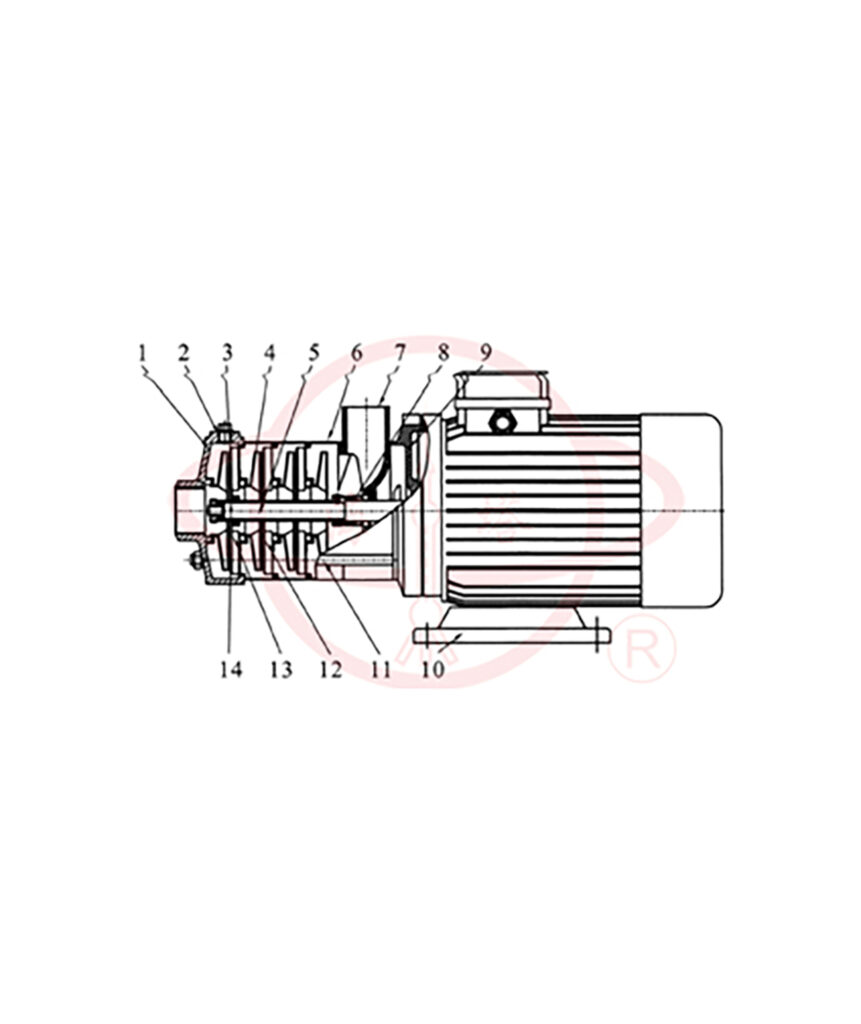
Figure 1: CHDF Series Horizontal Multistage Pump – Component Layout and Maintenance Access Points
3. Weekly Maintenance Tasks
3.1 Mechanical Seal Assessment
Inspect mechanical seal for leakage rate classification. Acceptable leakage is less than 3 drops per minute – visible as slight moisture without dripping. Warning level is 3-10 drops per minute requiring planned replacement within 30 days. Critical level exceeds 10 drops per minute necessitating immediate shutdown and seal replacement. Document leakage rate trends to predict optimal replacement timing.
3.2 Coupling Inspection
Check coupling for signs of wear, corrosion, or fatigue cracks. Verify coupling bolts are tightened to specification with thread locker applied. Inspect flexible elements (spider or diaphragm) for deterioration. Misalignment accelerates coupling wear – if premature wear observed, perform laser alignment verification.
4. Monthly Maintenance Procedures
4.1 Bearing Lubrication Protocol
Proper lubrication is the single most important factor in bearing longevity. CHDF pumps use deep groove ball bearings lubricated with lithium complex EP2 grease. Lubrication interval is 500 operating hours or monthly, whichever occurs first.
Lubrication Procedure: Clean grease fitting with lint-free cloth before attaching grease gun. Add fresh grease slowly while pump operates – this distributes grease through bearing. Continue until old grease begins purging from relief port. Wipe away excess grease to prevent dirt accumulation. Record date, grease quantity, and technician name in maintenance log.
4.2 Vibration Data Collection
Collect vibration readings monthly at bearing housings in three directions: horizontal radial, vertical radial, and axial. Use vibration analyzer with velocity measurement in mm/s RMS. Trend data over time – increasing vibration indicates developing problems. Alert level is 4.5 mm/s, shutdown level is 7.1 mm/s per ISO 10816-3.
5. Quarterly Maintenance Activities
5.1 Performance Testing
Conduct comprehensive performance evaluation quarterly to detect efficiency degradation. Measure and record: suction pressure, discharge pressure, flow rate via flow meter, and motor power consumption. Calculate total head (discharge minus suction pressure converted to meters) and pump efficiency. Compare results with original performance curve. Efficiency reduction exceeding 10% indicates internal wear requiring overhaul planning.
5.2 Electrical System Inspection
Perform insulation resistance test using megohmmeter – minimum acceptable value is 1 MΩ, values below 0.5 MΩ indicate moisture ingress requiring motor drying or rewinding. Check terminal connections for tightness and signs of overheating (discoloration). Verify motor protection settings match nameplate full load current.

Figure 2: CHDF Series Performance Curves – Flow vs Head for Various Models
6. Semi-Annual Maintenance (6 Months)
6.1 Alignment Verification
Perform precision shaft alignment check using laser alignment system or reverse dial indicator method. Thermal growth affects alignment – perform check at operating temperature when possible. Acceptable tolerances: parallel offset ≤0.05mm, angular deviation ≤0.05mm/m. Document as-found and as-left conditions for trending.
6.2 Mechanical Seal Planning
Plan mechanical seal replacement when operating hours exceed 8,000 or leakage exceeds warning level. Order seal kit in advance to minimize downtime. Verify seal material compatibility with pumped liquid – standard is carbon/silicon carbide with Viton O-rings.
7. Annual Overhaul Procedures
7.1 Complete Disassembly Inspection
Annual overhaul involves complete pump disassembly for thorough inspection. Document condition of all components with photographs. Measure and record:
- Impeller outside diameter – replace if wear exceeds 2mm
- Wear ring clearance – replace if exceeds 2x original specification
- Shaft runout – maximum allowable is 0.05mm TIR
- Bearing housing bore – check for fretting or elongation
- Casing condition – inspect for erosion, corrosion, or cracks
7.2 Bearing Replacement
Replace all bearings annually regardless of apparent condition. Use proper bearing pullers for removal – never apply force through rolling elements. Heat new bearings to 110°C using induction heater for installation – never use open flame. Pack bearings with grease before installation, filling 30-40% of free space.
7.3 Reassembly Specifications
Follow manufacturer assembly sequence precisely. Apply anti-seize compound to shaft threads and bolt threads. Torque all fasteners to specification using calibrated torque wrench. Rotate shaft manually after assembly – should turn freely without binding or roughness.
8. Long-Term Storage Procedures
8.1 Storage Preparation
For pumps stored longer than 30 days: completely drain all liquid, clean internal surfaces, apply rust preventive coating to machined surfaces, fill bearings with fresh grease, seal all openings with vapor-proof caps, store in climate-controlled environment with humidity below 60%.
8.2 Storage Maintenance
Rotate shaft 10 revolutions monthly to redistribute bearing lubrication and prevent brinelling. Inspect quarterly for corrosion or coating deterioration. Reapply rust preventive annually. Before returning to service, perform complete inspection and replace mechanical seal.
9. Spare Parts Inventory Recommendations
| Component | Quantity | Criticality | Lead Time |
|---|---|---|---|
| Mechanical Seal Kit | 1 set | Critical | 2-4 weeks |
| Bearing Set | 1 set | Critical | 1-2 weeks |
| Gasket Kit | 1 set | Essential | 1 week |
| O-Ring Assortment | 1 kit | Essential | 1 week |
| Grease Cartridge | 5 tubes | Consumable | Stock item |
10. Maintenance Documentation
Comprehensive documentation is essential for reliability program success. Maintain records of: all inspections with date and findings, lubrication activities with grease type and quantity, vibration trends with analysis, performance tests with calculations, repairs with parts replaced and labor hours. Use computerized maintenance management system (CMMS) when available.
11. Safety During Maintenance
⚠️ Lockout/Tagout Mandatory:
- Disconnect and lock out all electrical power sources
- Close and tag suction and discharge isolation valves
- Release all pressure from pump and piping
- Allow pump to cool to ambient temperature
- Use proper lifting equipment for heavy components
- Wear appropriate PPE: safety glasses, gloves, steel-toe shoes
12. Technical Support
Shanghai Chaodun Machinery Manufacturing Group Co., Ltd. provides comprehensive maintenance support including training, troubleshooting assistance, and spare parts supply.
Website: https://cd-pump.com