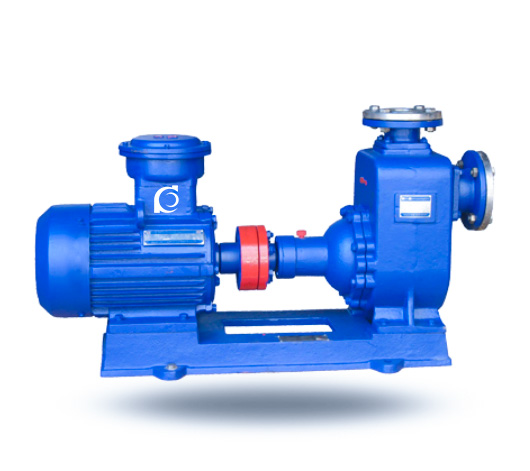
Product Overview
The CYZ-A Horizontal Self-Priming Oil Pump is a single-stage, horizontal, self-priming centrifugal pump, designed for the transfer of gasoline, kerosene, diesel, aviation fuel, and seawater or freshwater with a maximum temperature of 80°C.
This pump features reliable self-priming capabilities and does not require a foot valve on the suction line. By pre-filling the pump casing with a certain amount of liquid before startup, normal operation is ensured. This pump is widely used in the petroleum industry, land-based oil depots, tankers, marine cargo oil systems, and various auxiliary pump applications.
Model Designation

Key Features
-
Strong Self-Priming Capability: No foot valve required on the suction line, ensuring reliable startup and operation.
-
Suitable for Various Fluids: Capable of transferring gasoline, diesel, kerosene, aviation fuel, and other media.
-
High-Temperature Adaptability: Suitable for fluids with temperatures up to 80°C, including seawater and freshwater.
-
Simplified Piping System: No additional foot valve or safety valve required, simplifying system layout and installation.
-
Reliability: Constructed from durable materials, ensuring long-term stability and operation.
Engineering Summary
The CYZ-A self-priming oil pump adopts an axial-flow liquid return self-priming structure, utilizing continuous air-liquid mixing, separation, and circulation to achieve rapid self-priming.
Once started, the pump automatically expels air from the suction line and resumes stable liquid transfer, making it ideal for applications with frequent starts and stops or fluctuating suction conditions.
Typical Applications
The CYZ-A Horizontal Self-Priming Oil Pump is typically used in the following applications:
-
Petroleum industry and land-based oil storage facilities
-
Tank truck loading and unloading operations
-
Marine cargo oil pumps and hold pumps
-
Firefighting systems and ballast water systems
-
Mechanical cooling water circulation systems
This pump can also be installed on tank trucks or vessels, serving as a flat-bottom cargo pump with effective tank stripping capabilities.
System Configuration
The CYZ-A self-priming oil pump system includes:
-
Pump Casing: Integrated suction chamber, liquid storage chamber, and separation box, ensuring stable fluid transfer.
-
Mechanical Seals: Corrosion-resistant mechanical seals are available to suit different operating conditions.
-
Liquid Channels and Air-Liquid Separation Structure: Optimized design for efficient liquid transfer.
-
Cooling Chamber: Some models include a cooling chamber to ensure continuous high-temperature operation.
Components & Supply
The CYZ-A Horizontal Self-Priming Oil Pump consists of the following key components:
-
Pump casing (including suction chamber, liquid storage chamber, and separation box)
-
Pumping unit assembly
-
Shaft and bearing components
-
Mechanical seal components (corrosion-resistant types available)
-
Liquid channels and air-liquid separation structure
-
Cooling chamber (optional for selected models)
Technical Service
This pump is suitable for various application scenarios, with simple installation and maintenance. Regular inspection of the pump body, seals, and bearings is essential to ensure efficient operation. If any faults or anomalies are detected, timely maintenance and replacement of worn parts should be performed to maintain the pump’s self-priming capability and overall stability.
Operating Conditions
-
Applicable Fluids: Gasoline, kerosene, diesel, aviation fuel, seawater, or freshwater
-
Working Temperature: ≤80°C
-
Fluid Requirements: Should not contain excessive solid impurities
-
Chemical Fluids: Requires corrosion-resistant mechanical seals
-
Startup Requirements: The pump casing must be pre-filled with liquid before startup
Service Conditions
-
Applicable Environments: For the transportation and storage of petroleum, chemicals, and oil-water mixtures
-
Continuous Operation: Suitable for applications with frequent starts and stops and fluctuating suction conditions
-
Maintenance Requirements: Seals and bearings must be regularly inspected and replaced to ensure long-term stable operation
Protection Features
-
Integrated Pressure Relief and Bypass Return: When overpressure or pump shutdown occurs, fuel is automatically returned to the tank to prevent system damage.
-
Durable Materials and Structure: The pump uses high-quality mechanical seals and hard alloy materials to improve durability and ensure long-term stable operation.
Selection Criteria
When selecting the CYZ-A Horizontal Self-Priming Oil Pump, please consider the following factors:
-
Fluid Type: Whether it is gasoline, diesel, kerosene, aviation fuel, or seawater/freshwater.
-
Operating Environment: Whether the pump needs to operate in high-temperature conditions or requires corrosion-resistant materials.
-
Installation Requirements: Whether simplified piping layout and manual operation modes are needed.
-
Flow Rate: Choose the appropriate flow rate and pump configuration based on on-site requirements.
Specifications & Installation
Outline Drawing

Performance Data
| 1 | Coupling | 2 | Pump Shaft | 3 | Bearing | 4 | Mechanical Seal | 5 | Bearing Housing | 6 | Pump Shell | 7 | Discharge Seat |
| 8 | Suction Seat | 9 | Front Sealing Ring | 10 | Impeller | 11 | Rear Cover | 12 | Water Ring | 13 | Liquid Injection Hole | 14 | Return Liquid Hole |
Performance Parameters
| Model |
Flow Rate (m³/h)
|
Head (m)
|
Efficiency (%)
|
Speed (rpm)
|
Motor Power (kW)
|
Diameter
|
||
| (m3/h) |
(l/s)
|
(m) | (%) | (r/min) | (KW) |
suction
|
discharge
|
|
| 25CYZ-A-20 | 3.2 | 0.9 | 20 | 6.5 | 2900 | 0.75 | 25 | 25 |
| 25CYZ-A-32 | 3.2 | 0.9 | 32 | 6.5 | 2900 | 1.1 | 25 | 25 |
| 40CYZ-A-20 | 6.3 | 1.8 | 20 | 6.5 | 2900 | 1.1 | 40 | 32 |
| 40CYZ-A-40 | 10 | 2.8 | 40 | 6.5 | 2900 | 4 | 50 | 40 |
| 50CYZ-A-12 | 15 | 4.2 | 12 | 6.5 | 2900 | 1.6 | 50 | 50 |
| 50CYZ-A-20 | 18 | 5 | 20 | 6.5 | 2900 | 2.2 | 50 | 50 |
| 50CYZ-A-30 | 20 | 5.5 | 30 | 6.5 | 2900 | 4 | 50 | 50 |
| 50CYZ-A-40 | 10 | 2.8 | 40 | 6.5 | 2900 | 4 | 50 | 50 |
| 50CYZ-A-50 | 12.5 | 3.5 | 50 | 6.5 | 2900 | 5.5 | 50 | 50 |
| 50CYZ-A-60 | 15 | 4.2 | 60 | 6.5 | 2900 | 7.5 | 50 | 50 |
| 50CYZ-A-75 | 20 | 5.6 | 75 | 6.5 | 2900 | 11 | 50 | 50 |
| 65CYZ-A-15 | 30 | 8.3 | 15 | 6.5 | 2900 | 3 | 65 | 50 |
| 65CYZ-A-32 | 25 | 6.9 | 32 | 6.5 | 2900 | 5.5 | 65 | 50 |
| 80CYZ-A-13 | 35 | 9.7 | 13 | 6 | 2900 | 3 | 80 | 65 |
| 80CYZ-A-17 | 43 | 12 | 17 | 6 | 2900 | 4 | 80 | 65 |
| 80CYZ-A-22 | 40 | 11.1 | 22 | 6 | 2900 | 5.5 | 80 | 65 |
| 80CYZ-A-25 | 50 | 13.9 | 25 | 6 | 2900 | 7.5 | 80 | 80 |
| 80CYZ-A-32 | 50 | 13.9 | 32 | 6 | 2900 | 7.5 | 80 | 80 |
| 80CYZ-A-55 | 60 | 16.7 | 55 | 6 | 2900 | 18.5 | 80 | 80 |
| 80CYZ-A-70 | 60 | 16.7 | 70 | 6 | 2900 | 22 | 80 | 80 |
| 100CYZ-A-20 | 100 | 27.8 | 20 | 6 | 2900 | 11 | 100 | 80 |
| 100CYZ-A-40 | 100 | 27.8 | 40 | 6 | 2900 | 22 | 100 | 100 |
| 100CYZ-A-40A | 100 | 27.8 | 40 | 6 | 2900 | 22 | 100 | 100 |
| 10065CYZ-A-65 | 100 | 27.8 | 65 | 6 | 2900 | 30 | 100 | 100 |
| 100CYZ-A-75 | 70 | 19.4 | 75 | 6 | 2900 | 30 | 100 | 100 |
| 150CYZ-A-45 | 170 | 47.2 | 45 | 5 | 2900 | 37 | 150 | 100 |
| 150CYZ-A-55 | 170 | 47.2 | 55 | 5 | 2900 | 45 | 150 | 100 |
| 150CYZ-A-65 | 170 | 47.2 | 65 | 5 | 2900 | 55 | 150 | 100 |
| 150CYZ-A-80 | 160 | 44.4 | 80 | 5 | 2900 | 55 | 150 | 100 |
| 200CYZ-A-63 | 280 | 77.8 | 63 | 5 | 1450 | 90 | 200 | 150 |
| 250CYZ-A-50 | 400 | 111.1 | 50 | 5 | 1450 | 90 | 250 | 200 |
| 300CYZ-A-50 | 500 | 138.9 | 50 | 5 | 1450 | 110 | 300 | 250 |
Performance Curves

Outline Drawing(2)

Performance Data(2)
| 1 | Pump | |
| 2 | Pressure Gauge | |
| 3 | Discharge Vertical Pipe | |
| 4 | Suction Hard Pipe | |
| 5 | Elbow | |
| 6 | Flow Control Valve | |
| 7 | Discharge Pipeline | |
| 8 | Liquid Filling Plug | |
| 9 | Vacuum Gauge | |
PrecautionsInstallation &Requirements
|
||
Operating Manual
1. Operation & Running
-
For this series of self-priming pumps, high-quality calcium-based grease and No. 10 motor oil are used for lubrication based on the operating conditions. If grease is used, periodically grease the bearing housing. If motor oil is used, ensure the oil level is sufficient.
-
Check whether the liquid level in the pump casing is above the upper edge of the impeller. If the level is insufficient, fill the pump casing with liquid through the liquid filling port. Do not start the pump if the liquid level is too low, as it will lead to improper operation and damage to the mechanical seal.
-
Check whether any rotating parts of the pump are jammed or obstructed.
-
Check if the pump’s base and the bolts at each connection are tight.
-
Check the alignment and parallelism between the pump shaft and the motor shaft.
-
Check for air leaks in the suction pipeline. If any leaks are found, they must be corrected.
-
Open the suction valve and slightly open (not fully open) the discharge control valve.
2. Operation & Adjustment
-
Start the self-priming pump briefly and check if the pump shaft rotates in the correct direction.
-
Pay attention to abnormal sounds or vibrations during rotation.
-
Monitor the pressure and vacuum gauge readings. After a period of fluctuation, when the readings stabilize, it indicates that the pump has completed priming and is ready for normal fluid transfer.
-
Before the pump starts normal fluid transfer, closely monitor the temperature inside the pump during the priming process. If the temperature rises excessively during the priming process, stop the pump to investigate the cause.
-
If the liquid temperature in the pump becomes too high and causes difficulty in self-priming, temporarily stop the pump. You can use the liquid in the discharge pipeline to flow back into the pump or directly add liquid through the liquid filling port to lower the temperature, then restart the pump.
-
If the pump experiences strong vibration and noise during operation, it may be due to cavitation. Cavitation can be caused by: (1) excessive flow rate in the suction pipe, or (2) excessive suction lift. If the flow rate is too high, adjust the discharge control valve to increase the pressure reading. If there is a blockage in the suction line, clear it immediately; if the suction lift is too high, reduce the installation height of the pump.
-
If the pump stops during operation, when restarting, slightly open (do not fully close) the discharge control valve. This helps expel air from the discharge port during the self-priming process and allows the pump to start under a lighter load.
-
Check the pipeline system for any leaks.
3. Stopping the Pump
-
First, close the discharge pipeline valve.
-
Allow the pump to stop rotating.
-
During cold weather, drain the stored liquid from the pump casing and the water in the bearing housing cooling chamber to prevent freezing and damage to components.
Pump Pressure Control Range Chart
| Pump Model and Fluid Type | water | gasoline-powered pump | kerosene | diesel |
| 25CYZ-A-20 | 0.13-0.23 | 0.09-0.15 | 0.10-0.18 | 0.10-0.19 |
| 25CYZ-A-32 | 0.28-0.38 | 0.20-O.27 | 0.21-0.29 | 0.23-0.32 |
| 40CYZ-A-20 | 0.15-0.25 | 0.11-O.18 | 0.12-0.20 | 0.12-0.2l |
| 40CYZ-A-40 | 0.33-O.41 | 0.24-0.30 | 0.26-0.33 | 0.28-0.35 |
| 50CYZ-A-12 | 0.10-0.15 | 0.07-0.11 | 0.08-O.12 | 0.08-0.13 |
| 50CYZ-A-20 | 0.15-O.25 | 0.11-0.18 | 0.12-0.20 | 0.12-0.21 |
| 50CYZ-A-30 | 0.29-0.39 | 0.21-0.28 | 0.22-O.30 | 0.24-0.33 |
| 50CYZ-A-35 | 0.30-0.40 | 0.22-0.29 | 0.23-0.31 | 0.25-0.33 |
| 50CYZ-A-40 | 0.33-0.41 | 0.24-0.30 | 0.26-O.33 | 0.28-O.35 |
| 50CYZ-A-50 | 0.45-0.64 | O.33-0.47 | 0.36-0.46 | 0.38-0.49 |
| 50CYZ-A-60 | 0.55-0.65 | 0.40-0.47 | 0.48-0.60 | 0.47-0.55 |
| 50CYZ-A-75 | 0.72-0.78 | 0.53-O.57 | 0.58-0.62 | 0.61-0.66 |
| 65CYZ-A-15 | 0.12-0.20 | 0.09-O.13 | 0.09-0.14 | 0.10-0.15 |
| 65CYZ-A-32 | 0.29-0.39 | 0.21-0.28 | 0.22-O.30 | 0.24-0.33 |
| 80CYZ-A-13 | 0.10-0.15 | 0.07-0.11 | 0.08-0.12 | 0.08-0.13 |
| 80CYZ-A-17 | 0.13-0.21 | 0.09-0.15 | 0.10-O.17 | 0.11-O.18 |
| 80CYZ-A-22 | 0.19-0.26 | 0.13-0.20 | 0.14-0.21 | 0.14-0.22 |
| 80CYZ-A-25 | 0.21-0.28 | O.15-0.20 | 0.17-0.22 | 0.18-0.24 |
| 80CYZ-A-32 | 0.28-0.36 | 0.20-O.26 | 0.22-0.29 | 0.24-0.31 |
| 80CYZ-A-55 | 0.54-0.62 | 0.39-O.45 | 0.43-0.50 | 0.46-0.53 |
| 80CYZ-A-70 | 0.66-0.76 | 0.48-0.55 | 0.53-0.61 | 0.56-0.65 |
| 100CYZ-A-20 | 0.18-0.28 | 0.14-0.22 | 0.15-O.23 | O.15-0.24 |
| 100CYZ-A-40 | 0.37-0.49 | 0.27-0.36 | 0.30-O.39 | 0.31-0.39 |
| 100CYZ-A-40A | 0.35-0.46 | 0.26-0.34 | 0.28-0.37 | 0.30-O.39 |
| 100CYZ-A-65 | 0.60-0.68 | 0.44-0.50 | 0.48-0.54 | 0.51-0.58 |
| 100CYZ-A-75 | 0.72-0.78 | 0.53-0.57 | 0.58-O.63 | 0.61-0.66 |
| 150CYZ-A-55 | 0.52-0.58 | 0.38-0.42 | 0.42-0.46 | 0.44-0.49 |
| 150CYZ-A-65 | 0.60-0.66 | 0.44-0.48 | 0.48-0.53 | 0.51-0.56 |
| 150CYZ-A-80 | 0.72-0.77 | 0.53-0.56 | 0.56-O.62 | 0.61-0.65 |
| 200CYZ-A-63 | 0.63-0.69 | 0.45-O.5l | 0.51-O.53 | 0.53-0.58 |
| 250CYZ-A-50 | 0.45-0.60 | 0.33-0.44 | 0.36-0.46 | 0.38-O.49 |
OEM & Custom
We offer OEM branding, special seals for chemical liquids, custom inlet/outlet flanges, enhanced materials, marine-grade construction, tailored voltage motors, fuel-specific configurations, and export packing solutions.
FAQs
- 1. What liquids can the CYZ-A pump transfer?
Gasoline, kerosene, diesel, jet fuel, sea water, clean water, and chemical liquids with special seals. - 2. Does the pump require a bottom valve?
No. The CYZ-A pump has strong self-priming capability and does not need a bottom valve. - 3. What is the temperature range of the working medium?
The pump is suitable for -20°C to 80°C as shown in the PDF. - 4. Can the CYZ-A pump be used on ships?
Yes, it is ideal for cargo oil, bilge pumping, firefighting, and cooling systems. - 5. What should be checked before starting?
Priming liquid level, lubrication, shaft alignment, suction pipeline sealing, and valve positions. - 6. What causes insufficient flow?
Clogged impeller or pipe, worn seals, insufficient power, or low rotational speed. - 7. Is OEM customization available?
Yes, including materials, mechanical seals, flange standards, and motor options.