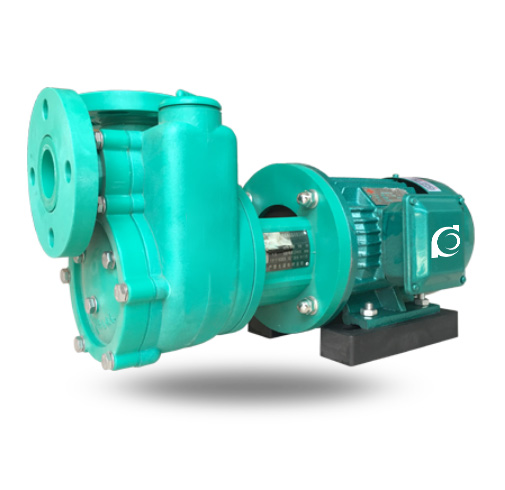
Product Overview
The FPZ enhanced polypropylene corrosion-resistant self-priming pump is made from reinforced polypropylene (CFR-PP), providing high mechanical strength and excellent corrosion resistance. The pump integrates a self-priming feature, eliminating the need for foot valves and ensuring easy startup. It is suitable for transferring various corrosive liquids within a temperature range of -40°C to 80°C, making it an ideal alternative to submersible pumps in corrosive service applications.
Model Designation

Key Features
-
High Corrosion Resistance: Made of CFR-PP material, enhancing the pump’s ability to withstand corrosive environments and ensuring long service life.
-
Self-Priming Design: The built-in self-priming feature eliminates the need for foot valves, simplifying installation and improving startup efficiency.
-
Wide Temperature Range: Suitable for transporting corrosive liquids within a temperature range of -40°C to 80°C, adaptable to a variety of operating conditions.
-
Leak-Free Operation: The mechanical seal design ensures no leakage during operation, with no need for external cooling water, enhancing safety and reliability.
Engineering Overview
The FPZ self-priming pump adopts an innovative multi-pump self-priming design, establishing a stable liquid circulation and gas-liquid separation system. Only an initial startup is required during the first use; subsequent starts are achieved automatically, ensuring continuous operation and high system reliability.
Typical Applications
This pump is widely used in chemical, petroleum, and pharmaceutical industries for transferring corrosive liquids. It offers reliable, continuous performance and low maintenance requirements, making it ideal for handling complex environments.
System Configuration
The FPZ enhanced polypropylene corrosion-resistant self-priming pump consists of a liquid suction chamber, liquid storage chamber, check valve chamber, gas-liquid separation chamber, reflux passage, pump casing, and mechanical seal components, forming a complete self-priming flow system.
Components and Supply
FPZ self-priming pumps can be customized based on user requirements, offering various flow rates, head heights, and power configurations to meet diverse industrial applications.
Technical Service
FPZ self-priming pumps offer comprehensive technical support, including installation, commissioning, regular maintenance, and troubleshooting services to ensure stable and reliable pump operation over time.
Operating Conditions
-
Applicable Media: Various corrosive liquids.
-
Media Temperature Range: -40°C to 80°C (CFR-PP material).
-
Startup Method: One-time initial startup, followed by self-startup.
-
Operating Mode: Mechanical seal without external cooling water, suitable for continuous operation.
Service Conditions
Regular inspection of the pump body and components is required, especially the mechanical seal and self-priming mechanism, to ensure optimal performance.
Protection Features
The FPZ self-priming pump is equipped with multiple protection features, including overcurrent protection, temperature protection, and liquid level protection systems, ensuring safe and stable pump operation.
Selection Standards
Select the appropriate model based on the pump’s flow rate, head height, and the specific properties of the media. To ensure optimal performance, it is recommended to choose the appropriate pump material and mechanical seal configuration based on operating conditions.
Specifications & Installation
Performance Curves

Performance Parameters
| Model | Diameter (mm) | Flow (m3/h) | Head (m) | Motor Power (kw) | Speed (r/min) | Self-Priming Height (m) | |
| Inlet | Outlet | ||||||
| 25FPZ-10 (Self-Priming) | 25 | 25 | 2.5 | 10 | 0.75 | 2900 | 3 |
| 32FPZ-11 (Self-Priming) | 32 | 25 | 3.5 | 11 | 0.75 | 2900 | 3 |
| 40FPZ-18 (Self-Priming) | 40 | 32 | 11 | 18 | 1.5 | 2900 | 4 |
| 50FPZ-20 (Self-Priming) | 50 | 40 | 13 | 20 | 2.2 | 2900 | 4 |
| 65FPZ-25 (Self-Priming) | 65 | 50 | 20 | 25 | 4 | 2900 | 4 |
| 80FPZ-32 (Self-Priming) | 80 | 65 | 50 | 32 | 7.5 | 2900 | 4 |
Data & Installation Diagram
| 1 | Inlet Flange | 9 | Impeller Shaft |  |
| 2 | Front Pump Cover | 10 | Bracket | |
| 3 | Outlet Flange | 11 | Oil Cap | |
| 4 | Liquid Injection | 12 | Tie Rod Bolt | |
| 5 | Pump Shell | 13 | Coupling | |
| 6 | Impeller | 14 | Base Plate | |
| 7 | Rear Pump Cover | 15 | Motor | |
| 8 | Mechanical Seal |
Performance Parameters(2)
| Model | L | L1 | L2 | L3 | L4 | H | H1 | H2 | B | B2 | B1 | D1 | D2 | 4-d |
| 25FPZ-10 | 460 | 290 | 100 | 110 | 60 | 260 | 190 | 50 | 150 | 110 | 110 | 100 | 85 | 12 |
| 32FPZ-11 | 460 | 290 | 100 | 110 | 60 | 260 | 190 | 50 | 150 | 110 | 110 | 100 | 85 | 18 |
| 40FPZ-18Direct-Coupled | 560 | 345 | 100 | 110 | 70 | 285 | 200 | 50 | 190 | 140 | 140 | 110 | 100 | 18 |
| 40FPZ-18Coupled | 780 | 300 | 345 | 105 | 70 | 300 | 220 | 60 | 290 | 250 | 210 | 110 | 100 | 18 |
| 50FPZ-20Direct-Coupled | 570 | 345 | 125 | 110 | 70 | 285 | 200 | 50 | 190 | 140 | 140 | 125 | 110 | 18 |
| 50FPZ-20Coupled | 790 | 290 | 345 | 105 | 70 | 300 | 220 | 60 | 290 | 250 | 210 | 125 | 110 | 18 |
| 65FPZ-28Direct-Coupled | 670 | 400 | 140 | 145 | 80 | 340 | 250 | 50 | 240 | 190 | 190 | 145 | 125 | 18 |
| 65FPZ-28Coupled | 950 | 395 | 365 | 145 | 80 | 400 | 310 | 95 | 335 | 275 | 250 | 145 | 125 | 18 |
| 80FPZ-30 | 1030 | 422 | 385 | 175 | 110 | 420 | 325 | 100 | 380 | 330 | 255 | 150 | 145 | 18 |
Performance Parameters(3)
| Model |
Flow Rate
(m3/h) |
Head
(m) |
Diameter
(mm) |
Motor Power
(Kw) |
Self-Priming Lift”
(m) |
Speed(r/min) | |
| 25FZB-20 | 1.5 | 23 | 25 | 25 | 1.5 | 3 | 2900 |
| 3.6 | 20 | ||||||
| 4.5 | 17 | ||||||
| 40FZB-20 | 5 | 22 | 40 | 40 | 3 | 3 | 2900 |
| 8 | 20 | ||||||
| 10 | 17 | ||||||
| 40FZB-30 | 5 | 33 | 40 | 40 | 3 | 3 | 2900 |
| 8 | 30 | ||||||
| 10 | 25 | ||||||
| 50FZB-20 | 8 | 25 | 50 | 50 | 3 | 3 | 2900 |
| 12 | 20 | ||||||
| 15 | 17 | ||||||
| 50FZB-30 | 8 | 33 | 50 | 50 | 3 | 3 | 2900 |
| 12 | 30 | ||||||
| 15 | 25 | ||||||
| 50FZB-45L | 8 | 48.5 | 50 | 32 | 7.5 | 3 | 2900 |
| 12 | 45 | ||||||
| 15 | 40 | ||||||
| 65FZB-20L | 20 | 23 | 65 | 50 | 4 | 3.5 | 2900 |
| 25 | 20 | ||||||
| 30 | 17 | ||||||
| 65FZB-30L | 20 | 33 | 65 | 50 | 7.5 | 3.5 | 2900 |
| 25 | 30 | ||||||
| 30 | 25 | ||||||
| 65FZB-40L | 20 | 42 | 65 | 50 | 11 | 3.5 | 2900 |
| 25 | 40 | ||||||
| 30 | 30 | ||||||
| 65FZB-45L | 20 | 47 | 65 | 50 | 11 | 3.5 | 2900 |
| 25 | 45 | ||||||
| 30 | 40 | ||||||
| 65FZB-50L | 20 | 52 | 65 | 50 | 15 | 3.5 | 2900 |
| 25 | 50 | ||||||
| 30 | 45 | ||||||
| 80FZB-20L | 30 | 23 | 80 | 65 | 5.5 | 4 | 2900 |
| 40 | 20 | ||||||
| 50 | 15 | ||||||
| 80FZB-30L | 40 | 33 | 80 | 65 | 11 | 4 | 2900 |
| 50 | 30 | ||||||
| 60 | 25 | ||||||
| 80FZB-45L | 40 | 48.5 | 80 | 65 | 15 | 4 | 2900 |
| 50 | 45 | ||||||
| 60 | 40 | ||||||
Corrosion Resistance of Materials
| Medium | Concentration | CFR-PP | Medium | Concentration | ||||||
| 25℃ | 65℃ | 90℃ | 20℃ | 60℃ | 80℃ | |||||
| 硫酸H2SO4 | 98% | √ | √ | ○ | 硫酸H2SO4 | <30% | √ | X | ||
| 70% | √ | √ | 30~70% | ○ | X | |||||
| 1~50% | √ | √ | √ | >75% | X | X | ||||
| 硝酸HNO3 | 浓 | √ | √ | ○ | 硝酸HNO3 | 10% | √ | ○ | ||
| 20% | √ | √ | √ | 20% | √ | |||||
| 10% | √ | √ | √ | 25~35% | ○ | |||||
| >50% | X | X | ||||||||
| 盐酸HC1 | 0~30% | √ | ○ | X | 盐酸HC1 | >30% | √ | X | ||
| 氢氟酸 | √ | X | X | 氢氟酸 | >10% | √ | X | |||
| 40~48% | √ | X | ||||||||
| 醋酸 | 1~50% | √ | √ | √ | 醋酸 | >20% | √ | ○ | ||
| 磷酸 | 各种浓度 | √ | √ | √ | 磷酸 | >30% | X | X | ||
| 氢氧化钠 | √ | √ | √ | 氢氧化钠 | √ | √ | √ | |||
| 氯化钢 | √ | √ | √ | 氯化钢 | √ | √ | X | |||
| 氯化钢 | √ | √ | ||||||||
| 乙醇 | √ | √ | √ | 乙醇 | √ | √ | ||||
| 漂白液 | √ | √ | √ | 漂白液 | ○ | ○ | X | |||
Operating Manual
Precautions
-
Before installation and use of the FPZ reinforced polypropylene corrosion-resistant self-priming pump (due to long-distance transportation), carefully check if all fastening components are loose. If any loosening is found, retighten them. Check the concentricity between the pump shaft and the motor shaft, and correct any misalignment.
-
Do not directly support the pipes on the pump’s inlet and outlet flanges; additional support points must be provided to prevent deformation and damage. Minimize hydraulic losses in the inlet pipeline, and do not use more than two 90° elbows. The suction pipe must not leak air, as this will affect the vacuum extraction and discharge time, or cause issues like no discharge, insufficient flow, or head.
-
Before the first startup, open the liquid cover, fill the pump body with the priming liquid, and securely tighten the liquid cover to prevent air leakage. Dry running or reverse rotation is strictly prohibited.
-
The conveyed liquid should not contain sand or long soft fibers to prevent damage to the impeller and mechanical seal.
-
The pump outlet should be fitted with a valve. Always close the valve before stopping the pump and open the valve only after starting the pump.
Maintenance and Repair
-
After a period of use, if leakage occurs at the mechanical seal’s end face, it is caused by wear. Adjust the dynamic ring by loosening the two screws on the stainless steel semicircle. Move it forward, then rotate the pump shaft by hand to ensure it rotates smoothly without resistance. Loose adjustments will cause leakage, and overly tight ones will accelerate wear, reducing the lifespan of the mechanical seal.
-
If the pump operates continuously for 8–16 hours per day, spare parts should be available for replacement during scheduled maintenance. The replacement period is typically two to three months. If the pump operates continuously for 24 hours, it should be checked and repaired regularly. For intermittent operation, maintenance can be done at any time.
-
If the density of the conveyed medium is greater than 1.2, an additional motor should be provided to avoid affecting the head or causing motor failure.
-
Disassembly sequence: First, remove the motor, bracket, and base plate screws. Remove the mechanical seal cover, loosen the dynamic ring retaining ring screws, the static ring pressure plate screws, and the front and rear pump cover screws. Loosen the impeller shaft screw and hit the shaft rod with a hammer to loosen the impeller. Then remove the shaft rod, impeller, and mechanical seal. During disassembly of the mechanical seal, handle it manually; do not use metal tools to strike it to prevent damage.
-
Inspection: Clean the pump casing, front and rear pump covers, impeller, and mechanical seal components of any debris and flush them clean. Unused parts that are not damaged can be reused. Check if the mechanical seal’s end faces are damaged. If the dynamic ring’s end face is slightly worn or scratched, polish it with fine metallographic sand on a flat surface. It can then be reused.
OEM & Custom
We support OEM, ODM, customized materials, customized voltage, customized colors, logo printing, packaging customization, bulk export solutions, and technical support for engineering projects.
FAQs
- 1. What materials are used for the FPZ pump?
The pump is made of reinforced polypropylene (CFR-PP) with excellent corrosion resistance. - 2. Can the pump handle acid and alkali liquids?
Yes, it is suitable for a wide range of corrosive media from -40℃ to 80℃. - 3. Do I need to fill liquid every time before starting?
No. Only the first startup requires filling; afterward, self-priming works automatically. - 4. Can you provide OEM customization?
Yes. We support logos, colors, motors, packaging, voltage customization, and more. - 5. What is the delivery time for export orders?
Typically 7–15 days depending on quantity. - 6. Do you supply spare parts?
Yes, mechanical seals, impellers, and accessories are available. - 7. Can I request samples?
Yes, samples can be provided upon request, and courier arrangements can be made.