Article Content
Product Overview
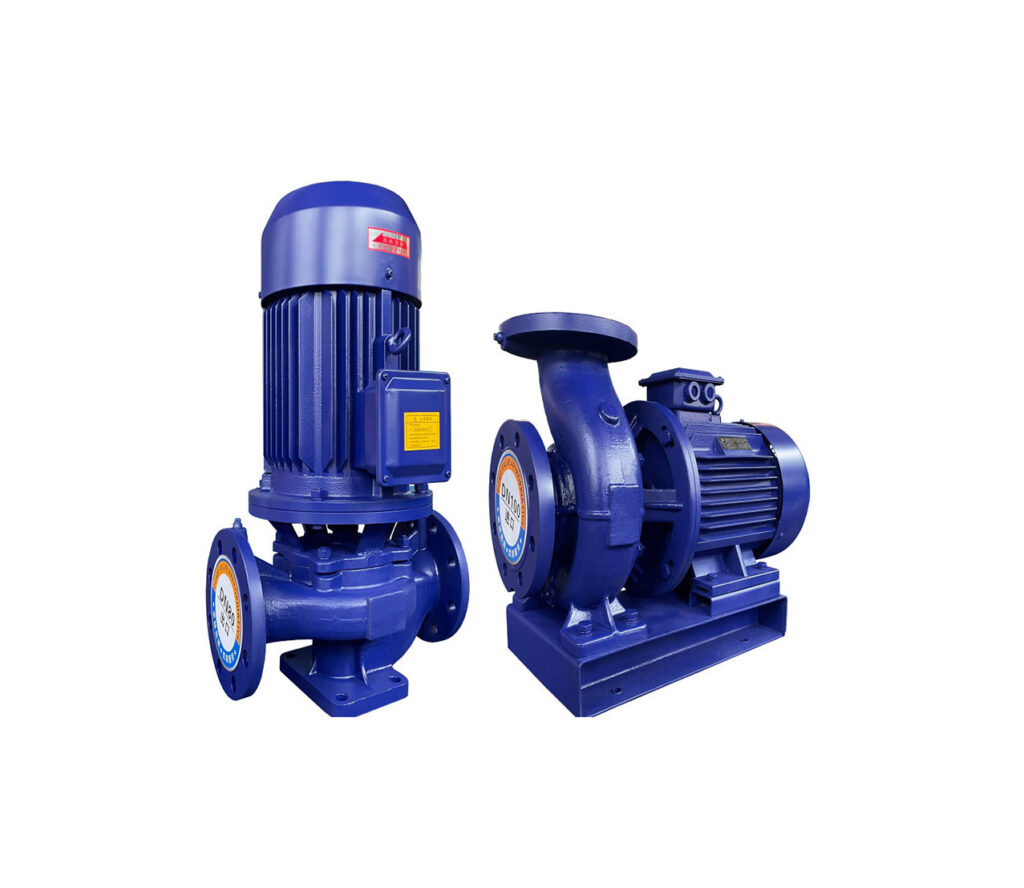
The ISG/ISW pipeline centrifugal pump series consists of single-stage, single-suction, inline pumps developed using advanced hydraulic models. The ISG type adopts a vertical inline design, while the ISW type is horizontal. Both feature compact structure, small footprint, low noise, and convenient installation. These pumps are widely used for water supply, circulation, and boosting in buildings, HVAC systems, fire-fighting, irrigation, and industrial processes.
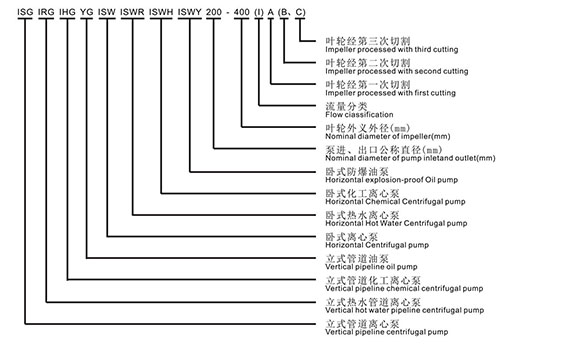
ISG / ISW Series Type Designation
Product Features
1. Compact structure, small volume, and aesthetic appearance; easy installation due to vertical or horizontal inline design.
2. The inlet and outlet are on the same centerline for direct pipeline installation without changing layout.
3. The pump operates smoothly with low noise and high concentricity of components.
4. Reliable mechanical seal ensures no leakage, made of cemented carbide and silicon carbide materials.
5. Easy maintenance: simply remove the motor and transmission components without disconnecting the pipeline.
6. Modular design allows flexible combination of inlet/outlet direction and flow capacity.
7. Suitable for clean water and liquids similar to water, with temperature up to 120°C depending on model.
Applications
• ISG vertical pipeline pumps: clean water circulation, HVAC, and pressure boosting.
• ISW horizontal inline pumps: water supply, air conditioning, and industrial cooling systems.
• IRG type: for hot water and boiler feed (≤120°C).
• IHG type: for mild chemical or corrosive liquids (≤120°C).
• YG type: for oil and petroleum liquids (≤120°C, viscosity ≤150cSt).
• GRG type: for high-temperature media (≤240°C) with cooling device.
Working Conditions
1. Maximum system pressure ≤1.6 MPa (16 bar).
2. The liquid temperature should not exceed 120°C (for GRG type ≤240°C).
3. Ambient temperature ≤40°C, relative humidity ≤95%.
4. Suitable for clean, non-flammable, non-explosive liquids without solid particles or fibers.
5. Power supply: 380V ±10%, 50Hz three-phase AC.
6. Rotation direction: clockwise when viewed from the motor top.
Structure Description
The ISG/ISW pumps consist of a motor, pump body, impeller, mechanical seal, and base.
– The ISG type is a vertical single-stage inline pump, with inlet and outlet flanges on the same level for direct installation.
– The ISW type is horizontal, featuring stable structure and convenient maintenance.
Both use standard motors connected directly to the pump shaft, ensuring high concentricity and vibration-free operation. The mechanical seal is located at the pump cover, made of wear-resistant materials for long service life.
Structure Diagram
(Product image)
| No. | Part Name | No. | Part Name |
|---|---|---|---|
| 1 | Pump casing | 6 | Mechanical seal |
| 2 | Impeller | 7 | Water-blocking ring |
| 3 | Impeller nut | 8 | Base |
| 4 | Pump cover | 9 | Motor |
| 5 | Air discharge valve | – | – |
List of Structural Materials
| Component | ISG | IRG | IHG | YG | ISW |
|---|---|---|---|---|---|
| Pump casing | HT200 | HT200 | Cast steel | HT200 | HT200 |
| Impeller | HT200 | HT200 | 1Cr18Ni9Ti | HT200 | HT200 |
| Mechanical seal | Graphite / SiC | Graphite / SiC | Alloy Graphite / SiC | Graphite / SiC | Graphite / SiC |
| Pump shaft | 45# Steel | 45# Steel | 1Cr18Ni9Ti | 45# Steel | 45# Steel |
| Pump cover | HT200 | HT200 | Cast steel | HT200 | HT200 |
Performance Parameters
(Refer to performance tables, flow rate 1.5–1600 m³/h, head 5–150 m, efficiency up to 85%)
These pumps offer broad performance coverage, including low-flow and high-head models. The hydraulic curves are optimized for stability and energy efficiency, making the series suitable for variable frequency systems and automatic pressure control applications.
Installation Instructions
1. Check for debris in the pipeline before installation to avoid impeller damage.
2. Ensure that the inlet and outlet pipelines are independently supported and aligned.
3. For hot water systems, use flexible joints to absorb thermal expansion.
4. Fill the pump with liquid before startup; dry running is strictly prohibited.
5. The pump must rotate freely before connecting to power.
6. Anchor bolts should be tightened evenly to avoid vibration.
Maintenance
1. Bearings should be lubricated every 500 hours of operation.
2. Check the mechanical seal periodically and replace if leakage exceeds 3 drops/min.
3. Avoid running under cavitation or overload conditions.
4. Clean the impeller and casing during scheduled maintenance.
5. Store the pump in a dry environment if not used for extended periods.
Troubleshooting
Problem: Pump not discharging water
Cause: Air trapped or valve closed.
Solution: Vent air, open valves.
Problem: Insufficient flow
Cause: Impeller wear or blockage.
Solution: Clean or replace impeller.
Problem: Excessive noise
Cause: Pipeline resonance or bearing wear.
Solution: Add vibration isolators, replace bearings.
Problem: Motor overheating
Cause: Overload or insufficient ventilation.
Solution: Check current, ensure adequate cooling.
Problem: Leakage at seal
Cause: Worn or improperly installed mechanical seal.
Solution: Replace and correctly install seal.
OEM & Custom Solutions
We provide OEM/ODM customization, including stainless steel construction, explosion-proof motors, and voltage customization (220V/415V/460V). Optional control panels, VFD systems, and flange standards (DIN/ANSI/JIS) are available. All pumps comply with ISO9001 and CE export standards, ensuring durability and global compatibility.
FAQs for Oversea Buyers
Q: What’s the difference between ISG and ISW pumps?
A: ISG is a vertical inline pump; ISW is horizontal. Both share the same hydraulic design but differ in installation layout.
Q: What liquids can they handle?
A: Clean water, hot water, mild chemicals, or oil-based liquids depending on material configuration.
Q: What’s the temperature range?
A: ISG ≤120°C, IRG ≤120°C, GRG ≤240°C (with cooling device).
Q: Are these pumps suitable for continuous duty?
A: Yes, designed for 24-hour operation with stable performance and low maintenance.
Q: What’s the maximum pressure?
A: Standard 1.6 MPa; customized versions up to 2.5 MPa.
Q: Can you provide OEM services?
A: Yes, OEM/ODM, private labeling, and custom packaging for export clients.
Q: Which markets do you export to?
A: Southeast Asia, Middle East, Africa, and South America for municipal, HVAC, and industrial applications.