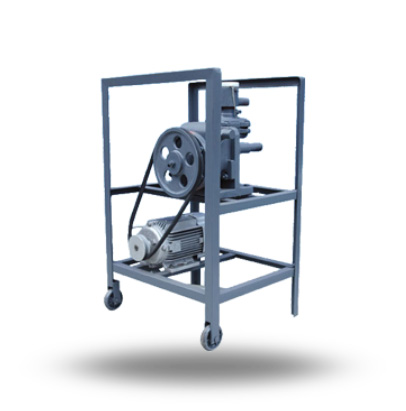
Key Features
-
Dual-mode drive: electric operation with manual backup for uninterrupted dispensing
-
Vane pump transfer mechanism for continuous, stable flow delivery
-
Explosion-proof three-phase induction motor for flammable media service
-
Integrated pressure relief/bypass return to the tank under nozzle closure or overpressure conditions
-
Optional flowmeter types (LXYL-25 rotary / LY-25 screw), with selectable accuracy classes
Engineering Summary
The JB-70 uses a V-belt transmission to drive a vane-type metering/transfer pump. Fuel is drawn from the storage tank through a filter element into the pump chamber, conveyed through the flowmeter for volumetric measurement, and delivered via the dispensing nozzle. An integrated pressure relief/bypass circuit automatically returns fuel to the tank when discharge pressure exceeds the rated limit or when the nozzle is closed and discharge is restricted, supporting stable operation and preventing overpressure.
Typical Applications
Suitable for dispensing and metering of gasoline, diesel, kerosene, lubricating oil, and edible oil. During operation, the nozzle controls delivery while the flowmeter records the dispensed volume. If the nozzle is closed while the pump continues running, the internal relief/bypass return function activates to route fuel back to the tank and avoid system overpressure. Manual drive can be used for emergency or no-power dispensing requirements.
System Configuration
The JB-70 is supplied as an integrated skid/stand-alone unit, consisting of a vane fuel pump, explosion-proof three-phase induction motor, V-belt drive assembly, flowmeter, integrated relief/bypass return circuit, manual drive mechanism, and dispensing nozzle with piping components. A suction-side filter element is included for basic filtration.
Components & Supply
-
Vane-type fuel pump
-
Explosion-proof three-phase induction motor (380 V / 50 Hz, 0.8 kW)
-
V-belt drive assembly (A-section V-belt, length 1168 mm)
-
Flowmeter (LXYL-25 rotary type or LY-25 screw type, optional)
-
Integrated pressure relief/bypass return circuit
-
Manual drive mechanism
-
Dispensing nozzle and piping components
-
Filtration component (filter element)
Technical Service
The unit adopts an independent skid/slide-base arrangement and does not require a special foundation. With an overall envelope of approximately 51 × 41 × 54 cm, it supports simplified installation, handling, and routine maintenance. The motor-to-pump drive is via V-belt transmission, and the manual drive mechanism enables direct operation when electrical power is unavailable, ensuring field service continuity.
Operating Conditions
-
Maximum suction lift: ≤ 4–5 m
-
Working pressure: approx. 0.25 MPa
-
Flow range: 25–60 L/min (up to 60–80 L/min under specific conditions)
-
Metering accuracy: ±2% (Class II), ±1% (Class I)
-
Nominal inlet diameter: φ25 mm
-
Power supply: 380 V / 50 Hz
-
Total weight: approx. 55 kg
Service Conditions
-
Applicable media: gasoline, diesel, kerosene, lubricating oil, edible oil
-
Operating modes: electric operation with 380 V / 50 Hz supply; manual operation for outage/off-grid conditions
-
Metering & dispensing: nozzle-controlled delivery with flowmeter volume registration
-
Restricted discharge condition: under nozzle closure or elevated discharge pressure, fuel is routed back to the tank via the relief/bypass return circuit
Protection Functions
-
Integrated relief/bypass return: automatic bypass return under overpressure or nozzle-closed discharge restriction to mitigate overpressure risk
-
Explosion-proof motor configuration: safety-matched drive for flammable media dispensing duty
-
Suction-side filtration: filter element reduces the risk of debris entering the pump chamber
Selection Criteria
Selection and configuration should be based on the following parameters and site conditions:
-
Media type (gasoline/diesel/kerosene/lubricating oil/edible oil) and duty characteristics
-
Required flow range (25–60 L/min, or 60–80 L/min under specific conditions) and system working pressure (approx. 0.25 MPa)
-
Suction lift condition (≤ 4–5 m) and available installation space (overall approx. 51 × 41 × 54 cm)
-
Power availability (380 V / 50 Hz) and continuity requirements (manual backup required or not)
-
Metering accuracy class (±2% / ±1%) and flowmeter type selection (LXYL-25 / LY-25)
Specifications & Installation
Outline Drawing

Performance Parameters
|
Model
|
Inlet/Outlet Diameter (mm)
|
Flow Range (L/min)
|
Suction Height (m)
|
Head (m)
|
Measurement Accuracy (%)
|
Motor Power (KW)
|
Voltage (V)
|
Weight (kg)
|
Cumulative Counter Range
|
|
JB-70
|
25
|
55-65
|
5
|
25
|
±1
|
0.75
|
380
|
75
|
999
|
Operating Manual
Maintenance and Care
-
Regularly check the vane pump, flow meter, oil dispensing gun, and oil delivery piping for any blockage. Rectify any abnormality promptly.
-
Keep the conductive rubber wheels clean, and prevent dirt accumulation that could impair insulation performance.
-
Before moving or servicing the unit, always disconnect the power supply and turn the explosion-proof motor switch to “Off” to eliminate safety risks.
-
Clean the inlet strainer regularly. To clean it, loosen the screw on the piping housing, remove the strainer screen, and avoid damaging the screen. Replace it immediately if damaged.
-
After 500 operating hours, disassemble and inspect the vane pump, oil gun, and piping for cleaning.
-
To simplify the structure, this unit is supplied without a lighting fixture. If the counter must be observed, use a certified explosion-proof light only; do not use ordinary lights or flashlights.
Operating Procedure
-
Switch on the power supply and turn the explosion-proof motor switch to “On”.
-
Squeeze the oil gun handle to dispense oil; the flow meter will start counting.
-
Release the oil gun handle to stop the flow; the counter will display the dispensed quantity (or the difference between the current and previous readings).
-
To stop operation, turn the explosion-proof motor switch to “Off”, and then switch off the power supply.
Precautions for Use
-
If the pump has been stored for an extended period, measure the motor insulation resistance with a megohmmeter before use. The value shall not be less than 10 MΩ.
-
Before start-up, confirm correct motor rotation (facing the pulley, the motor shall rotate clockwise).
-
With the nozzle closed, the motor shall not continue pumping oil for more than 1 minute.
-
Adjust pressure by the overflow valve adjustment screw to maintain proper discharge efficiency and pressure.
-
To reset the flow meter counter, press the copper cap on the side of the counter inward, then rotate the handwheel counterclockwise to return the pointer to zero.
-
Control the tightness of the oil gun handle to roughly adjust the oil flow rate.
-
Prevent wear of the rubber cable by keeping it off the ground. Inspect the cable regularly for any damage.
-
When not in use, store the oil gun and cable properly. Clean the inlet pipe before inserting it into the oil pool or drum.
-
Ensure proper grounding of the power supply and confirm correct phase sequence wiring before connecting the rubber cable.
-
Do not replace the pump oil pipes with plastic or nylon pipes that may generate static electricity.
-
Do not use ordinary cables in place of the dedicated rubber cable.
-
Operators should avoid wearing synthetic clothing and shall comply with applicable safety protocols for the petroleum and chemical industries.
-
Never exceed the rated flow, to avoid increased static electricity accumulation and related safety hazards.
OEM & Custom
We offer OEM branding, custom hoses, upgraded flow meters, explosion-proof components, enhanced seals, special oils compatibility, customized voltage motors, and export-ready packaging for international customers.
FAQs
- 1. What types of fuel can the JB-70 pump handle?
Gasoline, diesel, kerosene, engine oil, and edible oil. - 2. Can the pump work without electricity?
Yes, the manual hand-crank mode allows operation without power. - 3. Is the motor explosion-proof?
Yes, the pump uses an explosion-proof three-phase asynchronous motor. - 4. What is the accuracy of the flow meter?
LXYL-25: ±2%, LY-25: ±1% depending on model. - 5. How high can the pump suction be?
Normal suction height is 4–5 meters. - 6. Does the pump have a relief valve?
Yes, the built-in overflow valve prevents overpressure when the nozzle is closed. - 7. Is OEM customization available?
Yes, including branding, hoses, meters, motor specifications, and packaging.