Product Description
Model Code Explanation

Product Introduction
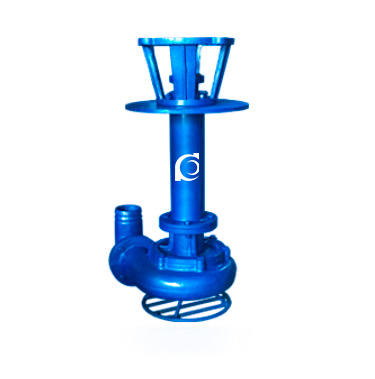
The NL vertical slurry pump is a single-stage, single-suction vertical centrifugal pump. Its main components include the volute casing, impeller, pump seat, pump casing, support tube, motor base and electric motor. The volute, pump seat, motor base and impeller nut are all made of cast iron, which provides good corrosion resistance and convenient machinability.
The impeller is a three-blade single circular-arc bent vane type, using a semi-open impeller made of malleable cast iron. It features high strength, good corrosion resistance, easy machining, excellent passing capability and high efficiency.
To reduce weight and turning work, the pump shaft is made of high-quality carbon steel cold-drawn round bar. Four framework oil seals and a shaft sleeve are installed in the pump seat to prevent shaft wear and extend shaft service life.
The NL slurry pump can be used either vertically or inclined, and has a small footprint. The volute casing must be submerged in the working medium during operation, which makes starting easy and eliminates the need for priming. When viewed from the motor end, the pump must rotate clockwise.
The overall pump length is available in a variety of specifications, allowing users to select models flexibly according to application and site conditions.
Product Applications
1. In rural areas, the NL vertical slurry pump is mainly used for pumping river sludge, manure, river water and slurry feed for irrigation, replacing manual carrying and shoulder transport. It can also be used for drainage and drought relief, bank shaping, lifting river mud for fertilizer production, and as a simple mobile fire-fighting pump in villages, as well as for pond cleaning with water and oxygenation in fish farming.
2. The slurry pumps produced by our company can be used in municipal, chemical, dyeing and printing, pharmaceutical, shipbuilding, casting and food industries to pump viscous liquids, turbid liquids, pastes, quicksand and flowing sludge in urban rivers. They can also be used in coal mines to discharge fluids containing mud and small gravel.
3. When used together with a high-pressure pump and water gun to form a hydraulic earthwork machinery unit, the pump can serve in land leveling, river and pond dredging, air-defense projects and underground works for excavation and hydraulic transport of soil.
Operating Conditions
1. The NL vertical slurry pump is a single-stage, single-suction centrifugal pump, suitable for use in mines, paper mills, dyeing and printing plants, environmental protection, graphite and mica production, gold mining, ceramics, oil refining, petroleum, chemical plants, farms, salt and iodine fields, dyestuff plants, breweries, food factories, fertilizer plants, coking and beneficiation plants, construction, marble plants and gold mines. Typical duties include pumping slurry, quicksand, mud ponds, sewage ponds, turbid liquids, dense slurries, loading media and suspended solids. It can also be used for coal mine drainage and fluid containing mud lumps.
2. When used together with a high-pressure pump and water gun to form a hydraulic earthwork machinery unit, the pump can be used for land leveling, dredging and trenching of rivers and ponds, as well as various small-scale water conservancy works and urban air-defense projects.
3. In aquaculture, it can be used for pond cleaning with water and for oxygenation of fish ponds.
Structure Diagram

|
No.
|
Part name / type
|
No.
|
Part name / type
|
No.
|
Part name / type
|
|
1
|
Strainer
|
9
|
Discharge elbow
|
17
|
Support tube
|
|
2
|
Impeller nut
|
10
|
Pump shaft
|
18
|
Bearing cover
|
|
3
|
Impeller
|
11
|
Bearing
|
19
|
Driven coupling
|
|
4
|
Pump casing
|
12
|
Driven coupling
|
20
|
Motor base
|
|
5
|
Pump seat
|
13
|
Driving coupling
|
21
|
Motor bracket C
|
|
6
|
O-ring
|
14
|
Connecting tube
|
22
|
Driving coupling
|
|
7
|
Oil seal
|
15
|
Bearing housing
|
23
|
Electric motor
|
|
8
|
Shaft sleeve
|
16
|
Coupling shaft
|
24
|
Elastic block
|
Performance Parameters
|
Model
|
Speed n
r/min |
Flow Q
m³/h |
Head H
m |
Efficiency η
% |
Motor power
kW |
Overall pump length
mm |
Unit weight
kg |
|
NL50-8
NL50A-8 |
1450
|
20–30
|
8–9
|
42
|
1.5
|
1310
|
63
|
|
NL50-12
NL50A-12 |
1450
|
25–38
|
12–14
|
41
|
3
|
1310
|
80
|
|
NL50-24
NL50A-24 |
1450
|
25–38
|
20–24
|
41
|
5.5
|
1430
|
152
|
|
NL65-16
NL65A-16 |
1450
|
50–60
|
15–18
|
42
|
5.5
|
1430
|
152
|
|
NL65-25
NL65A-25 |
1450
|
50–60
|
20–25
|
42
|
11
|
1510
|
265
|
|
NL76-9
NL76A-9 |
1450
|
50–70
|
9–10
|
42
|
3
|
1350
|
90
|
|
NL76-16
NL76A-16 |
1450
|
50–70
|
14–16
|
42
|
5.5
|
1430
|
152
|
|
NL76-20
NL76A-20 |
1450
|
50–70
|
18–20
|
42
|
7.5
|
1430
|
155
|
|
NL80-8
NL80A-8 |
1450
|
60–70
|
7–9
|
56
|
4
|
1400
|
120
|
|
NL80-12
NL80A-12 |
1450
|
80–120
|
11–13
|
56
|
7.5
|
1430
|
145
|
|
NL80-25
NL80A-25 |
1450
|
80–100
|
25
|
56
|
11
|
1550
|
270
|
|
NL100-7
NL100A-7 |
1450
|
70–80
|
6–8
|
61
|
4
|
1430
|
130
|
|
NL100-10
NL100A-10 |
1450
|
100
|
10
|
61
|
7.5
|
1450
|
160
|
|
NL100-16
NL100A-16 |
1450
|
80–100
|
15–17
|
61
|
15
|
1510
|
270
|
|
NL100-25
NL100A-25 |
1450
|
80–100
|
20–25
|
61
|
18.5
|
1690
|
350
|
|
NL150-12
NL150A-12 |
1450
|
100–150
|
11–13
|
66
|
18.5
|
1690
|
350
|
|
NL150-16
NL150A-16 |
1450
|
120–180
|
15–20
|
68
|
22
|
1690
|
370
|
Operating Notes
1. The power supply for this pump must be a three-phase, four-wire system. If no ground wire is available, one must be added to prevent electric leakage. During operation, a circuit fuse and switch matching the motor must be installed nearby to prevent motor burnout in case the impeller is jammed by foreign materials.
2. The pump can operate without any fixed foundation; it can simply lean securely against a firm support. If necessary, tie it with a rope to prevent accidents. After starting, check the motor rotation direction. Reverse rotation must not exceed one minute.
3. When the pumped liquid contains a large amount of weeds, iron wire, wooden strips, bricks and other debris, they should be removed as much as possible in advance. A wire basket or similar device can be installed to prevent debris from entering the pump and causing impeller damage, seizure or pipeline blockage.
4. After pumping mud or other turbid media, let the pump run briefly on clean water to flush the inside of the pump body and pipeline.
5. When working outdoors, a protective cover should be installed on the motor to prevent rainwater from entering.
6. When pumping sludge from riverbeds or pond bottoms, the pump can be suspended on a tripod, or placed on a floating pontoon or boat for mobile operations. During earthwork operations, the soil blocks broken up by a high-pressure water gun must have a maximum diameter no greater than one-third of the suction inlet diameter.
7. The rated speed specified for the NL slurry pump is its maximum allowable speed and must not be arbitrarily increased. Reducing the speed is not restricted, but the efficiency will be noticeably reduced.
8. When the pump is used to handle thick mud, highly viscous liquids or for high head and long-distance slurry transport, the load conditions will change. However, the load must not be increased by altering the pump structure.
9. In general, after about 1,250 hours of operation, the pump should undergo regular maintenance: dismantle the pump seat to check the bearings and sealing condition, clean and replace grease, and replace oil seals, shaft sleeves and other parts if necessary. For units using mechanical seals, perform regular maintenance after approximately 3,500 hours of operation. For details on maintenance and parts replacement, refer to the installation instructions.
10. When the pump is to be out of service for a long period, remove the volute casing, wipe all parts dry, apply a thin layer of oil to all sliding and mating surfaces, and store the pump in a dry place for future use.
Disassembly and Installation
I. Disassembly
1. Remove the motor or mounting plate and the discharge pipe.
2. Remove the volute casing and impeller nut, gently pry behind the impeller and remove the impeller together with the key.
3. Remove the driven half coupling, then remove the key. After that, remove the motor base and separate it from the support tube.
4. Remove the bolts connecting the pump seat and support tube, and separate them.
5. Remove the shaft sleeve and bearings from the shaft.
II. Installation
1. Inspect all parts to ensure there is no damage. Apply a thin layer of grease to both sides of all paper gaskets, and fill the bearings with grease to about two-thirds of their volume.
2. Fill the framework oil seals fully with grease before installing them into the pump seat, then install the bearings.
3. After installing the O-ring into the shaft sleeve, coat it with grease.
4. Install the bearings into the motor base, place the paper gasket and oil deflector ring, then assemble the shaft and support tube and fix them with screws.
5. Install the paper gasket, then mount the bearing, shaft sleeve, key, pump seat and impeller. Tighten the impeller nut, then turn the impeller by hand. It should rotate smoothly and freely.
6. Install the paper gasket and mount the pump casing, fixing it with screws, then install the strainer. Turn the impeller by hand again; it should still rotate freely.
7. Install the key and driven coupling on the pump shaft, and the key and driving coupling on the motor shaft. Then fasten the motor to the motor base with bolts. After installation, the axial clearance between the driving and driven couplings must be 1–1.5 mm.
OEM & Custom Solutions
Chaodun Pump provides OEM and ODM customization for global distributors. Options include material customization (cast iron, stainless steel), branding, and design modifications. We support international trade, sample orders, and full logistics assistance for export clients.
FAQs for Overseas Buyers
1. What industries use NL/NLA mud pumps?
They are widely applied in agriculture, mining, chemical, and municipal sewage systems.
2. Can this pump be installed vertically or inclined?
Yes, the NL/NLA pump can operate both vertically and at an angle depending on installation needs.
3. What is the maximum particle size it can handle?
It can handle small solids, mud, and sand typically found in industrial and agricultural environments.
4. Is it suitable for river dredging or pond cleaning?
Yes, it can be mounted on floating platforms for dredging and sludge removal.
5. What materials are available for construction?
Standard models are made of cast iron; stainless steel options are available for corrosive media.
6. What are the power range and efficiency?
Power ranges from 1.5kW to 22kW with efficiencies up to 68%.
7. Does Chaodun Pump offer OEM customization?
Yes, full OEM branding and custom engineering support are available for export clients.