Product Overview
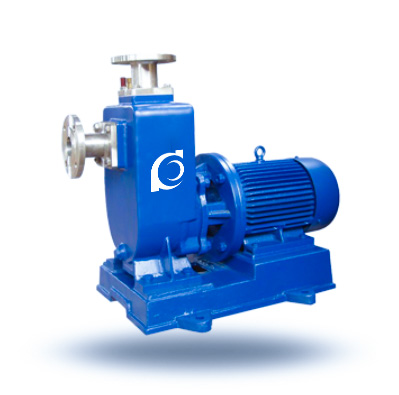
The ZXL Self-Priming Clean Water Centrifugal Pump is a compact self-priming centrifugal pump that is simple to operate, runs smoothly, requires minimal maintenance, offers high efficiency, and has a long service life.
This pump is designed with excellent self-priming capabilities, eliminating the need for foot valves. Only a certain amount of start-up liquid needs to be retained in the pump casing before starting, simplifying the piping configuration and improving the operating conditions on-site. It is suitable for pumping clean water and other liquids with similar physical and chemical properties to water.
Model Designation

Key Features
-
Reliable self-priming capability without the need for foot valves.
-
Compact structure, stable operation, and low noise.
-
Efficient gas-liquid separation system ensuring reliable self-priming performance.
-
Capable of handling media with moderate viscosity and limited solid content.
Engineering Overview
The ZXL self-priming pump uses an internal gas-liquid separation and circulation structure to ensure automatic venting and rapid priming at startup.
This design is particularly suitable for applications requiring frequent starts and stops or where foot valves cannot be installed, ensuring system reliability and simplifying the overall system design.
Typical Applications
The ZXL Self-Priming Clean Water Centrifugal Pump is widely used in the following areas:
-
Municipal environmental protection projects
-
Building services and fire protection systems
-
Chemical, pharmaceutical, dyeing, electroplating, papermaking, petroleum, and mining industries
-
Equipment cooling systems and tanker unloading operations
-
Agricultural irrigation systems (when spray devices are installed)
-
Filter press systems for slurry transport
This pump is suitable for clean water, seawater, mildly acidic or alkaline chemical liquids, and media with moderate viscosity.
System Configuration
The ZXL Self-Priming Clean Water Centrifugal Pump consists mainly of the following components:
-
Pump casing assembly: suction chamber, liquid storage tank, pump box, circulation port, and gas-liquid separation chamber
-
Rotating assembly: impeller, pump shaft, shaft sleeve
-
Sealing system: front and rear sealing rings (standard configuration), controlling internal leakage between high-pressure and low-pressure zones
-
Bearing assembly: models equipped with cooling chambers for bearing temperature control
-
Bearing lubrication: grease or light oil
Technical Service
Operating Conditions
-
Applicable media: Clean water, seawater, mildly acidic or alkaline liquids
-
Maximum viscosity: ≤100 cP
-
Maximum solid content: ≤30%
-
Cooling requirement: External cooling water can be connected if bearing housing temperature exceeds 70°C
-
Working temperature:
-
General service: ≤80°C
-
Boiler feed water service: ≤105°C
-
-
Maximum system working pressure: ≤0.6 MPa
-
Environmental temperature: ≤40°C, humidity: ≤95%
Service Conditions
-
Applicable media: Clean water or liquids with similar properties to water
-
Particle size: ≤1%, particle diameter ≤0.1 mm
-
Bearing lubrication: Calcium-based grease
Protection Features
-
Self-priming ability: Reliable self-priming performance ensured through optimized gas-liquid separation technology.
-
Temperature monitoring: An optional external cooling water system can maintain bearing temperature within a safe range.
Selection Criteria
Pump selection should be based on the actual application requirements, including the type of media, flow rate, working pressure, and temperature conditions.
Ensure proper selection of sealing type and cooling system to ensure the pump’s long-term stable operation.
Installation & Dimensions
Outline Drawing

Performance Data
| 1 | Coupling | 2 | Pump Shaft | 3 | Bearing | 4 | Mechanical Seal | 5 | Bearing Housing | 6 | Pump Casing | 7 | Discharge Base |
| 8 | Suction Base | 9 | Front Seal Ring | 10 | Impeller | 11 | Rear Cover | 12 | Water Deflector Ring | 13 | Filling Port | 14 | Return Port |
Performance Parameters
| Model |
Inlet
|
Outlet
|
Suction Lift
|
Motor Power
|
Flow Rate
|
Head
|
| (mm) | (mm) | (m) | (kW) | (m3/h) | (m) | |
| 25ZXL3.2-20 | 25 | 25 | 6.5 | 0.75 | 3.2 | 20 |
| 25ZXL3.2-32 | 25 | 25 | 6.5 | 1.1 | 3.2 | 32 |
| 40ZXL6.3-20 | 40 | 32 | 6.5 | 1.1 | 6.3 | 20 |
| 40ZXL10-40 | 40 | 40 | 6.5 | 4 | 10 | 40 |
| 50ZXL15-12 | 50 | 50 | 6.5 | 1.5 | 15 | 12 |
| 50ZXL18-20 | 50 | 50 | 6.5 | 2.2 | 18 | 20 |
| 50ZXL12.5-32 | 50 | 50 | 6.5 | 3 | 12.5 | 32 |
| 50ZXL20-30 | 50 | 50 | 6.5 | 4 | 20 | 30 |
| 50ZXL14-35 | 50 | 50 | 6.5 | 4 | 14 | 35 |
| 50ZXL10-40 | 50 | 50 | 6.5 | 4 | 10 | 40 |
| 50ZXL12.5-50 | 50 | 50 | 6.5 | 5.5 | 12.5 | 50 |
| 50ZXL15-60 | 50 | 50 | 6.5 | 7.5 | 15 | 60 |
| 50ZXL20-75 | 50 | 50 | 6.5 | 11 | 20 | 75 |
| Model |
Inlet
|
Outlet
|
Suction Lift
|
Motor Power
|
Flow Rate
|
Head
|
| (mm) | (mm) | (m) | (kW) | (m3/h) | (m) | |
| 65ZXL30-15 | 65 | 50 | 6.5 | 3 | 30 | 15 |
| 65ZXL25-32 | 65 | 50 | 6 | 5.5 | 25 | 32 |
| 80ZXL35-13 | 80 | 80 | 6 | 2.2 | 35 | 13 |
| 80ZXL43-17 | 80 | 80 | 6 | 4 | 43 | 17 |
| 80ZXL40-22 | 80 | 80 | 6 | 5.5 | 40 | 22 |
| 80ZXL50-25 | 80 | 80 | 6 | 7.5 | 50 | 25 |
| 80ZXL50-32 | 80 | 80 | 6 | 7.5 | 50 | 32 |
| 80ZXL60-55 | 80 | 80 | 6 | 18.5 | 60 | 55 |
| 80ZXL60-70 | 80 | 80 | 6 | 22 | 60 | 70 |
| 100ZXL100-20 | 100 | 80 | 6 | 11 | 100 | 20 |
| 100ZXL100-40 | 100 | 100 | 6 | 18.5 | 100 | 40 |
| 100ZXL100-65 | 100 | 100 | 6 | 30 | 100 | 65 |
| 100ZXL70-75 | 100 | 100 | 6 | 30 | 70 | 75 |
| Model |
Inlet
|
Outlet
|
Suction Lift
|
Motor Power
|
Flow Rate
|
Head
|
| (mm) | (mm) | (m) | (kW) | (m3/h) | (m) | |
| 150ZXL170-55 | 150 | 150 | 5 | 45 | 170 | 55 |
| 150ZXL170-65 | 150 | 150 | 5 | 55 | 170 | 65 |
| 150ZXL160-80 | 150 | 150 | 5 | 55 | 160 | 80 |
| 200ZXL400-32 | 200 | 200 | 5 | 55 | 400 | 32 |
| 200ZXL280-63 | 200 | 200 | 5 | 90 | 280 | 63 |
| 200ZXL350-65 | 200 | 200 | 5 | 110 | 350 | 65 |
| 250ZXL550-32 | 250 | 250 | 5 | 75 | 550 | 32 |
| 250ZXL400-50 | 250 | 250 | 5 | 90 | 400 | 50 |
| 250ZXL450-55 | 250 | 250 | 5 | 110 | 450 | 55 |
| 250ZXL400-75 | 250 | 250 | 5 | 132 | 400 | 75 |
| 300ZXL600-32 | 300 | 300 | 5 | 90 | 600 | 32 |
| 300ZXL500-50 | 300 | 300 | 5 | 110 | 500 | 50 |
| 300ZXL550-55 | 300 | 300 | 5 | 132 | 550 | 55 |
Operating Manual
Pre-installation Preparation
-
Lubrication Check: Based on operational conditions, use high-quality calcium-based grease and No. 10 machine oil for lubrication. For pumps using grease, ensure regular re-lubrication in the bearing housing. If the pump uses oil lubrication, ensure the oil level is sufficient and replenish if necessary.
-
Liquid Check: Ensure the liquid stored in the pump casing is above the top edge of the impeller. If it is insufficient, add the starting liquid directly into the pump casing through the filling port on the casing. If liquid is insufficient, the pump should not be started, as this will prevent normal operation and may damage the mechanical seals.
-
Rotating Parts Check: Check if there is any friction or collision with the rotating parts of the pump.
-
Fastening Check: Inspect whether the nuts on the pump base and all connection points are loose.
-
Alignment Check: Verify the concentricity and parallelism between the pump shaft and motor shaft.
-
Leakage Check: Check if there is any air leakage in the suction pipe. Any leakage must be eliminated.
-
Valve Check: Open the suction pipe valve and slightly open (not fully) the discharge control valve.
Start-up and Operation
-
Initial Check: Start the self-priming pump slowly and check if the pump shaft rotates in the correct direction.
-
Abnormal Noise or Vibration: Pay attention to any unusual noise or vibration during operation.
-
Pressure and Vacuum Gauge Readings: Observe the readings of the pressure gauge and vacuum gauge. After start-up, when the readings stabilize after fluctuations, the pump is fully operational and in a normal fluid transport state.
-
Temperature Monitoring: During the self-priming process, especially before the pump begins normal fluid transport, pay attention to the increase in liquid temperature within the pump. If the process takes too long and the liquid temperature is too high, stop the pump and check the cause.
-
Cooling Measures: If the liquid temperature is too high, making self-priming difficult, stop the pump, allow the liquid in the discharge pipe to return to the pump, or add liquid directly through the filling port to reduce the temperature, and then restart the pump.
-
Cavitation Check: If strong vibrations and noise occur, the pump may be cavitating. This is typically caused by high suction pipe velocity or excessive suction. Adjust the discharge control valve to increase the pressure gauge reading. If there are blockages in the suction pipe, they should be cleared immediately.
-
Re-start Process: If the pump stops during operation and needs to be restarted, slightly close the discharge control valve (not fully), which helps expel air from the discharge port during self-priming, ensuring the pump starts under a lighter load.
-
Pipe Leakage Check: Inspect the pipe system for leaks.
Shutdown
-
Valve Closure: First, close the discharge pipeline gate valve.
-
Pump Stop: Stop the pump.
-
Cold Weather Protection: In cold weather, drain the liquid from the pump casing and bearing housing cooling chamber to prevent freezing and cracking of parts.
Maintenance and Service
-
Key Parts Inspection:
A. Roller Bearings: After long-term operation, when the bearings are worn to a certain extent, they must be replaced.
B. Front and Rear Seals: Replace the seals when they wear to a certain extent.
C. Mechanical Seals: If the mechanical seal is not leaking, it generally does not require disassembly for inspection. If there is severe leakage from the drain hole at the bottom of the bearing housing, disassemble and inspect the mechanical seal. When disassembling and assembling the mechanical seal, be cautious and keep the material surfaces clean, protecting the mirror surfaces of the stationary and rotating rings, and avoid impact. Leaks caused by mechanical seals are often due to scratches on the mirror surface. The solution is to re-polish the surface. Another cause of leakage is improper installation, deformation, or aging of the O-ring (or buffer plate). In such cases, the O-ring should be adjusted or replaced and reassembled. -
Pump Disassembly Steps:
A. Motor Disassembly: Disassemble the motor or disconnect the coupling.
B. Bearing Housing Inspection: Remove the bearing housing and inspect the radial clearance between the impeller and front wear ring, and check if the impeller nut is loose.
C. Impeller Disassembly: Unscrew the impeller nut and remove the impeller, then check the radial clearance between the impeller and the rear seal ring.
D. Mechanical Seal Disassembly: Loosen the fixed screws of the mechanical seal, pull out the rotating part, check the contact condition of the rotating and fixed rings, and check the sealing condition of the O-ring (or buffer plate).
E. Coupling Disassembly: Unscrew the coupling fixing nut and remove the coupling.
F. Bearing Removal: Remove the bearing end cover and take out the bearings from the pump shaft.
G. Reassembly: Reassemble the pump following the reverse order of disassembly.
Installation
-
Alignment Check: When the pump is directly coupled with the motor, ensure the concentricity between the pump shaft and motor output shaft. Installation accuracy significantly impacts the smooth operation and lifespan of the pump, so careful installation and alignment are essential.
-
Pump Joint Tightening: The pump joints must be securely fixed with bolts, and the nuts must be locked to prevent loosening, as this may cause axial movement of the impeller and potentially result in mechanical failure.
-
Suction Port Height: To ensure the pump retains a certain amount of start-up liquid, the suction port must be above the pump shaft centerline to ensure good self-priming performance and prevent dry running of the mechanical seal.
-
Pipe Installation:
A. The installation height of the suction inlet should not exceed 3.5 meters. If conditions allow, the suction inlet should be placed as low as possible below the minimum water level of the storage tank, and the length of the suction pipe should be minimized, reducing elbows. This will shorten the self-priming time and enhance self-priming performance.
B. Valves, flanges, and other components of the suction pipe must be strictly sealed to prevent air leakage or liquid leakage.
C. Install a filter to prevent solid foreign objects from entering the pump casing.
D. The suction and discharge pipelines must each have their own support. The pump must not bear the load of the pipes. -
Static Grounding Resistance Check: During installation, ensure that the static grounding resistance of the pump and pipe meets the specified requirements.
-
Installation Check: During installation, check the electrostatic resistance of the pump casing and pipe to ensure it meets the required standards.
-
Coupling Adjustment: Adjust the installation clearance and concentricity of the pump coupling and motor coupling. The permissible deviation for concentricity is 0.1 mm. Any height difference between the pump shaft and motor shaft can be adjusted by inserting copper or iron shims beneath the base.
-
Final Check: After the pump has been running for 3-4 hours, perform a final inspection. If there are no abnormalities, the installation is considered satisfactory. During the test run, check the bearing temperature, which should not exceed 70°C.
-
Cooling Water Connection: For pumps equipped with cooling chambers for bearing temperature control, connect cooling water through rubber or plastic hoses with an inner diameter of Φ12 mm. The thread size is M12×1.25.
-
Vent Pipe Installation: If a check valve is installed on the discharge pipeline and air cannot be vented smoothly during self-priming, install a small vent pipe and valve on the pump’s discharge port.
OEM & Custom
We offer OEM and ODM services, including customized materials, different voltage and frequency motors, special flange standards, customized colors, logo printing and export-oriented packaging solutions to meet various project requirements.
FAQs
- 1. What liquids can the ZX / ZXL pump handle?
The pump is mainly designed for clean water or liquids with similar physical properties without large solid particles. - 2. Does the pump need a bottom valve?
No. After initial filling, the pump has self-priming capability and does not require a bottom valve. - 3. What is the maximum medium temperature?
Generally 0–80°C for clean water applications. Please contact us for higher temperature options. - 4. Can it be used for agricultural irrigation?
Yes. It is widely used for farmland irrigation, garden watering and small-scale water transfer. - 5. Is installation complicated?
No. With compact structure, the pump is easy to install and requires simple pipeline layout. - 6. What is the normal delivery time?
Usually 7–15 days depending on order quantity and customization requirements. - 7. Are spare parts available?
Yes. We provide impellers, mechanical seals, seal rings and bearings for long-term maintenance support.