Product Overview
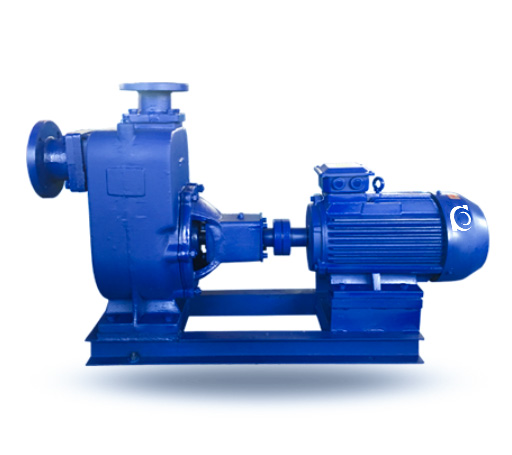
The ZW Non-Clogging Self-Priming Sewage Pump integrates self-priming functionality and non-clogging wastewater handling performance, specifically designed for surface installation.
With specially designed pump casing and impeller flow paths, the pump operates like a standard self-priming clean water pump, without the need for foot valves or manual startup. It reliably transports liquids containing large solid particles and long fibrous impurities.
It is widely used in municipal and industrial wastewater treatment, and serves as an effective alternative to submersible sewage pumps.
Model Designation
Key Features
-
Powerful Self-Priming Capability: No foot valve required, simplifying the system design and improving self-priming efficiency.
-
Compact Design: Saves space, easy to install and maintain, and structurally reliable.
-
High Efficiency & Long Lifespan: Efficient operation, adaptable to complex operational environments, with durability for long-term use.
-
Wide Applicability: Suitable for various wastewater applications, including those with large solid particles and long fibrous impurities.
Engineering Summary
The ZW pump features an internal liquid storage chamber combined with a gas-liquid separation structure.
After shutdown, a certain volume of liquid remains in the pump casing. Upon startup, the stored liquid mixes with air entering the aerator, the gas-liquid mixture is separated, air is discharged, and a vacuum is formed inside the pump chamber, completing the self-priming process.
This design ensures stable self-priming performance and robust solid handling capacity, enabling continuous operation under complex conditions.
Typical Applications
The ZW series pump is widely used in:
-
Municipal sewage treatment projects and sewage treatment plants
-
Industrial and commercial wastewater discharge systems
-
Hospital, hotel, and urban household sewage discharge
-
Construction sites, mines, and sediment impurity treatment
-
Rural biogas pits, agricultural irrigation, and aquaculture facilities
The pump is capable of handling wastewater containing particles, sludge, and mildly corrosive media, and is also suitable for clean water and weakly corrosive liquids.
System Configuration
The ZW Non-Clogging Self-Priming Pump primarily consists of:
-
Suction Chamber
-
Liquid Storage Chamber
-
Pump Casing and Recirculation Channel
-
Gas-Liquid Separation Chamber
-
Conveyance Unit Assembly
-
Bearing Casing and Sealing Components
-
(Optional) Bearing Cooling Chamber
Components and Supply
The pump components are made from corrosion-resistant, high-strength materials to ensure long-term stable operation.
Major components include:
-
Pump Casing: Made of cast iron or stainless steel, offering excellent corrosion resistance and pressure performance.
-
Impeller: Optimized design to ensure fluid passage capability and self-priming performance.
-
Bearing System: Provides stable support, maintaining high efficiency after extended operation.
-
Sealing System: Features a dual-seal design to effectively prevent liquid leakage from high-pressure areas to low-pressure areas.
Technical Service
The ZW Self-Priming Pump provides comprehensive technical support and services, including:
-
Installation Guidance: Detailed installation manuals and on-site support.
-
Maintenance and Repairs: Regular maintenance and repair services to ensure efficient pump operation.
-
Technical Assistance: 24/7 technical support to resolve operational issues.
Operating Conditions
-
A fixed volume of liquid must be retained in the pump casing before startup to ensure self-priming.
-
The fluid being transported may contain small solids (≤30%).
-
Maximum allowable viscosity: ≤100 cP.
-
Bearing temperature should be monitored during continuous operation to ensure it remains within a safe range.
-
Suitable for general industrial and agricultural water or similar media.
Service Conditions
The ZW Self-Priming Pump performs well in fluctuating operational environments and adapts to varying conditions.
-
Operating Ambient Temperature: Suitable for a wide range of operational environments.
-
Humidity Tolerance: Suitable for high humidity environments, with moisture-resistant pump and motor designs.
-
Flow and Pressure Fluctuations: The pump remains stable under varying flow and pressure conditions.
Protection Features
The ZW Self-Priming Pump is equipped with a comprehensive protection system, including:
-
Overload Protection: Prevents the pump from operating under excessive loads, protecting the equipment.
-
Overheat Protection: Automatically shuts down the pump if the temperature exceeds the set limit.
-
Dry-Run Protection: The system automatically shuts down if the pump fails to prime due to insufficient liquid.
Selection Criteria
When selecting the ZW Self-Priming Pump, consider the following factors:
-
Flow Requirements: Determine the required flow range based on the actual application.
-
Type of Media: Select the appropriate pump materials to handle different chemical media.
-
Operating Pressure: Ensure the pump’s maximum working pressure meets system requirements.
-
Operating Environment: Consider the impact of ambient temperature, humidity, and other external factors on pump performance.
Specifications & Installation
Outline Drawing

Performance Data
|
No.
|
Name
|
Serial No.
|
Name
|
|
1
|
Inlet Connection
|
9
|
Impeller
|
|
2
|
Inlet Flange
|
10
|
Mechanical Seal
|
|
3
|
Inlet Valve Seat
|
11
|
Water Seal
|
|
4
|
Water Filling Valve
|
12
|
Bearing Seat
|
|
5
|
Outlet Connection
|
13
|
Pump Shaft
|
|
6
|
Pump Body
|
14
|
Bearing Cover
|
|
7
|
Gas-Liquid Separation Pipe
|
15
|
Bottom Cover Plate
|
|
8
|
Rear Cover
|
16
|
Bolts
|
Performance Parameters
|
Model
|
Flow Rate (m³/h)
|
Head (m)
|
Motor Power (kW)
|
Speed (rpm)
|
Efficiency (%)
|
NPSHr (m)
|
|
(m3/h)
|
(M)
|
(kw)
|
(r/min)
|
(%)
|
(M)
|
|
|
ZW25-8-15
|
8
|
15
|
2.2
|
2900
|
45
|
2
|
|
ZW32-10-20
|
10
|
20
|
2.2
|
2900
|
45
|
2.5
|
|
ZW40-20-15
|
20
|
15
|
2.2
|
2900
|
45
|
2.5
|
|
ZW40-15-30
|
15
|
30
|
3
|
2900
|
48
|
2.5
|
|
ZW50-10-20
|
10
|
20
|
2.2
|
2900
|
45
|
2.5
|
|
ZW50-20-15
|
20
|
15
|
2.2
|
2900
|
45
|
2.5
|
|
ZW50-18-22
|
18
|
22
|
3
|
2900
|
48
|
2.5
|
|
ZW50-15-30
|
15
|
30
|
3
|
2900
|
48
|
2.5
|
|
ZW65-30-18
|
30
|
18
|
4
|
2900
|
45
|
2.5
|
|
ZW65-20-30
|
20
|
30
|
5.5
|
2900
|
45
|
2.5
|
|
ZW65-25-40
|
25
|
40
|
7.5
|
2900
|
50
|
3
|
|
ZW80-40-16
|
40
|
16
|
4
|
1450
|
50
|
3
|
|
ZW80-65-25
|
65
|
25
|
7.5
|
2900
|
50
|
3
|
|
ZW80-80-35
|
80
|
35
|
15
|
2900
|
45
|
3
|
|
ZW80-50-60
|
50
|
60
|
22
|
2900
|
55
|
3
|
|
ZW80-80-45
|
80
|
45
|
22
|
2900
|
55
|
3
|
|
Model
|
Flow Rate (m³/h)
|
Head (m)
|
Motor Power (kW)
|
Speed (rpm)
|
Efficiency (%)
|
NPSHr (m)
|
|
(m3/h)
|
(M)
|
(kw)
|
(r/min)
|
(%)
|
(M)
|
|
|
ZW100-80-20
|
80
|
20
|
7.5
|
1450
|
53
|
4
|
|
ZW100-100-15
|
100
|
15
|
7.5
|
1450
|
50
|
4
|
|
ZW100-100-20
|
100
|
20
|
11
|
1450
|
53
|
4
|
|
ZW100-100-30
|
100
|
30
|
22
|
2900
|
53
|
4
|
|
ZW100-80-45
|
80
|
45
|
30
|
2900
|
55
|
4
|
|
ZW100-80-60
|
80
|
60
|
37
|
290
|
53
|
4
|
|
ZW100-80-80
|
80
|
80
|
45
|
2900
|
50
|
4
|
|
ZW125-120-20
|
120
|
20
|
15
|
1450
|
55
|
4.5
|
|
ZW150-200-15
|
200
|
15
|
15
|
1450
|
60
|
5
|
|
ZW150-200-20
|
200
|
20
|
22
|
1450
|
60
|
5
|
|
ZW150-200-28
|
200
|
28
|
30
|
1450
|
65
|
5
|
|
ZW150-400-25
|
400
|
25
|
55
|
1450
|
45
|
5
|
|
ZW150-180-40
|
180
|
40
|
55
|
1450
|
65
|
5
|
|
ZW200-280-12
|
280
|
12
|
22
|
1450
|
62
|
5
|
|
ZW200-300-18
|
300
|
18
|
37
|
1450
|
59
|
5
|
|
ZW200-300-25
|
300
|
25
|
45
|
1450
|
55
|
5
|
|
ZW200-280-28
|
280
|
28
|
55
|
1450
|
61
|
5
|
|
ZW250-400-22
|
400
|
22
|
55
|
1450
|
65
|
5
|
|
ZW300-800-14
|
800
|
14
|
55
|
1450
|
61
|
5
|
Operating Manual
Pre-Start Inspection
-
Check if the pump base, bearing housing, bearing seat, and other connection points are securely fastened. If any parts are loose, tighten them.
-
Manually rotate the coupling to check for any jamming or unusual noise.
-
Open the water inlet valve on the top of the pump and fill the liquid chamber with water to at least two-thirds of the pump’s volume, then close the valve. No further priming will be required once the pump starts.
-
Connect the power supply and briefly test the rotation. From the motor end, check that the rotation is clockwise (reversing direction is strictly prohibited).
-
Start the pump and observe its operation. If any abnormal phenomena occur, identify and resolve the issue.
OEM & Custom
Supports OEM/ODM, customized materials, corrosion-resistant structures, voltage customization, flange standards, private label and export packaging solutions.
FAQs
- 1. Can the pump pass solid particles?
Yes. It handles solids depending on the inlet diameter. - 2. Does the pump require a bottom valve?
No. It features true self-priming without bottom valves. - 3. Can it handle slurry or fibrous waste?
Yes. Designed for slurry, fibers, and mixed wastewater. - 4. What is the allowable medium temperature?
0–80°C under normal operating conditions. - 5. Is maintenance complicated?
No. The pump has a simple, robust structure. - 6. What is the delivery time?
Usually 7–15 days depending on quantity. - 7. Are spare parts available?
Yes. Impellers, seals, plates, shafts and bases are available.