Model Designation

Applications
• Sewage treatment plants
• Municipal waste management
• Industrial wastewater systems
• Stormwater pumping and drainage systems
• Agricultural wastewater systems
Engineering Advantages
• Self-priming capability: No foot valve needed, enabling quick and reliable start-up even after being idle.
• Non-clogging hydraulics: Capable of handling solids, fibers, and debris without clogging, ensuring continuous operation.
• Robust construction: Made from high-quality corrosion-resistant materials for durability in harsh environments.
• Easy maintenance design: Compact and service-friendly, making it easy to perform regular maintenance and repairs.
System Components
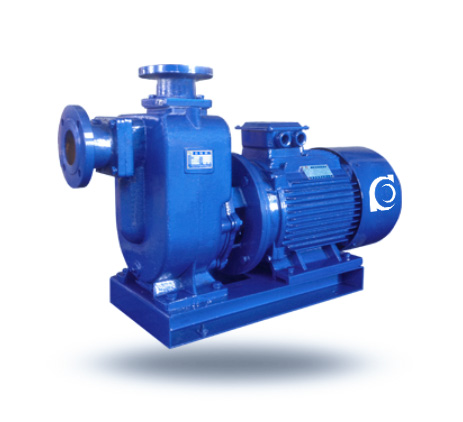
The ZW/ZWP/ZWPB/ZWB Non-Clogging Self-Priming Sewage Pump consists of the following main components:
• Pump casing
• Impeller
• Self-priming chamber
• Gas-liquid separation mechanism
• Mechanical seals and bearings
• Pressure relief valve
Technical Parameters
Service Conditions
• Fluid Type: Sewage, industrial wastewater, stormwater
• Operating Temperature: ≤ 60°C
Operating Conditions
- Flow Rate: 8 – 800 m³/h
- Head: 12 – 80 m
- Power Range: 2.2 – 55 kW
- Speed: 1450 / 2900 rpm
- Liquid Temperature: ≤ 60°C
- Working Pressure: ≤ 1.0 MPa
Detailed parameter tables are provided below.
Specifications & Installation
Outline Drawing

Performance Data
| NO. | Name | Serial Number | Name |
| 1 | Inlet Connection | 9 | Impeller |
| 2 | Inlet Flange | 10 | Mechanical Seal |
| 3 | Inlet Valve Seat | 11 | Water Stop Ring |
| 4 | Water Supply Valve | 12 | Bearing Seat |
| 5 | Outlet Connection | 13 | Pump Shaft |
| 6 | Pump Body | 14 | Bearing Cover |
| 7 | Gas-Liquid Separation Pipe | 15 | Bottom Cover Plate |
| 8 | Rear Cover | 16 | Bolts |
Performance Parameters
| Model | Flow Rate (m³/h) | Head (m) | Motor Power (kW) | Speed (rpm) | Efficiency (%) | NPSHr (m) |
| (m3/h) | (M) | (kw) | (r/min) | (%) | (M) | |
| ZW25-8-15 | 8 | 15 | 2.2 | 2900 | 45 | 2 |
| ZW32-10-20 | 10 | 20 | 2.2 | 2900 | 45 | 2.5 |
| ZW40-20-15 | 20 | 15 | 2.2 | 2900 | 45 | 2.5 |
| ZW40-15-30 | 15 | 30 | 3 | 2900 | 48 | 2.5 |
| ZW50-10-20 | 10 | 20 | 2.2 | 2900 | 45 | 2.5 |
| ZW50-20-15 | 20 | 15 | 2.2 | 2900 | 45 | 2.5 |
| ZW50-18-22 | 18 | 22 | 3 | 2900 | 48 | 2.5 |
| ZW50-15-30 | 15 | 30 | 3 | 2900 | 48 | 2.5 |
| ZW65-30-18 | 30 | 18 | 4 | 2900 | 45 | 2.5 |
| ZW65-20-30 | 20 | 30 | 5.5 | 2900 | 45 | 2.5 |
| ZW65-25-40 | 25 | 40 | 7.5 | 2900 | 50 | 3 |
| ZW80-40-16 | 40 | 16 | 4 | 1450 | 50 | 3 |
| ZW80-65-25 | 65 | 25 | 7.5 | 2900 | 50 | 3 |
| ZW80-80-35 | 80 | 35 | 15 | 2900 | 45 | 3 |
| ZW80-50-60 | 50 | 60 | 22 | 2900 | 55 | 3 |
| ZW80-80-45 | 80 | 45 | 22 | 2900 | 55 | 3 |
| Model | Flow Rate (m³/h) | Head (m) | Motor Power (kW) | Speed (rpm) | Efficiency (%) | NPSHr (m) |
| (m3/h) | (M) | (kw) | (r/min) | (%) | (M) | |
| ZW100-80-20 | 80 | 20 | 7.5 | 1450 | 53 | 4 |
| ZW100-100-15 | 100 | 15 | 7.5 | 1450 | 50 | 4 |
| ZW100-100-20 | 100 | 20 | 11 | 1450 | 53 | 4 |
| ZW100-100-30 | 100 | 30 | 22 | 2900 | 53 | 4 |
| ZW100-80-45 | 80 | 45 | 30 | 2900 | 55 | 4 |
| ZW100-80-60 | 80 | 60 | 37 | 290 | 53 | 4 |
| ZW100-80-80 | 80 | 80 | 45 | 2900 | 50 | 4 |
| ZW125-120-20 | 120 | 20 | 15 | 1450 | 55 | 4.5 |
| ZW150-200-15 | 200 | 15 | 15 | 1450 | 60 | 5 |
| ZW150-200-20 | 200 | 20 | 22 | 1450 | 60 | 5 |
| ZW150-200-28 | 200 | 28 | 30 | 1450 | 65 | 5 |
| ZW150-400-25 | 400 | 25 | 55 | 1450 | 45 | 5 |
| ZW150-180-40 | 180 | 40 | 55 | 1450 | 65 | 5 |
| ZW200-280-12 | 280 | 12 | 22 | 1450 | 62 | 5 |
| ZW200-300-18 | 300 | 18 | 37 | 1450 | 59 | 5 |
| ZW200-300-25 | 300 | 25 | 45 | 1450 | 55 | 5 |
| ZW200-280-28 | 280 | 28 | 55 | 1450 | 61 | 5 |
| ZW250-400-22 | 400 | 22 | 55 | 1450 | 65 | 5 |
| ZW300-800-14 | 800 | 14 | 55 | 1450 | 61 | 5 |
How to Select a Pump Model
• Determine the required flow rate based on the volume of sewage or wastewater to be transferred.
• Select the appropriate pump head based on system pressure and vertical lifting requirements.
• Ensure compatibility with the type of waste (e.g., solids, fibers, or chemical content) being transferred.
• Consider environmental factors such as temperature and corrosive conditions when selecting the pump.
Engineering Notes
• Ensure proper priming before starting the pump to avoid dry running and damage.
• Monitor the pressure relief valve for proper operation during pump start-up and operation.
• Inspect seals and bearings regularly for wear and tear, replacing components as needed.
• Clean and inspect the pump casing regularly to prevent blockages from debris and solids.
Compliance & Quality Assurance
• Factory testing to ensure the pump operates within the designed parameters for flow and pressure.
• Material traceability for all wetted components to ensure the use of high-quality, corrosion-resistant materials.
• Hydraulic performance testing to confirm pump efficiency and reliability under various conditions.
• Third-party inspections available to verify quality standards and performance.
Safety Notice
• Do not operate under dry running conditions to avoid damaging the pump’s mechanical seals.
• Ensure proper suction priming before starting the pump to prevent cavitation.
• Disconnect power before performing any maintenance or repairs.
• Regularly inspect seals for wear and tear to maintain efficiency and prevent leaks.
OEM & Custom
This pump series supports engineered configuration and duty-based matching.
Available options include:
• Motor voltage & frequency
• Mechanical seal type and configuration
• Wetted parts material selection
• Surface coating and corrosion protection
FAQs
Q: What is the maximum allowable viscosity for the pump?
A: The pump is suitable for liquids with a maximum viscosity of 100 cP.
Q: Can this pump operate under variable flow conditions?
A: Yes, the pump is designed to operate efficiently even under fluctuating flow and pressure conditions.
Q: What materials are used for the wetted components?
A: The wetted components are made from high-quality cast iron or stainless steel for durability.
Q: How often should the pump be maintained?
A: Regular maintenance is recommended every 6 months, including seal inspection and filter cleaning.
Q: What is the maximum working pressure of the pump?
A: The maximum working pressure is 1.0 MPa.