Product Description
Model Code Explanation
Product Introduction
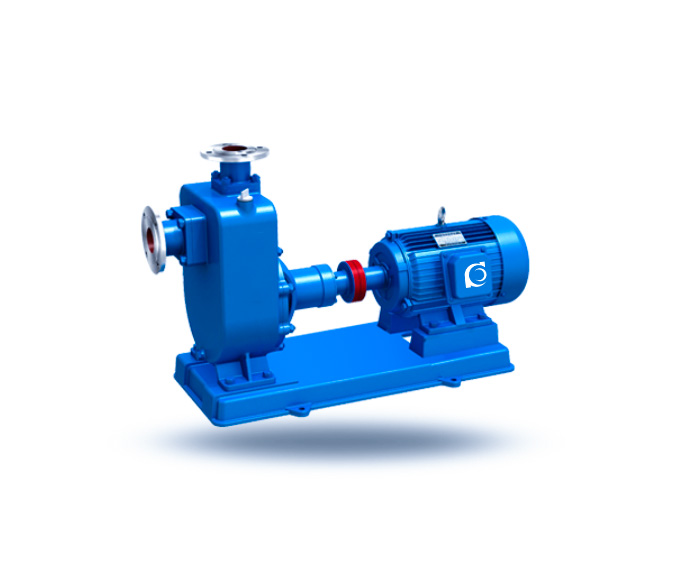
ZX Clear Water Centrifugal Self-Priming Pump is a self-priming centrifugal pump that has the advantages of compact structure, easy operation, stable performance, easy maintenance, high efficiency, long service life, and strong self-priming capability. No bottom valve is required in the pipeline, and only a fixed amount of liquid needs to be retained in the pump body before operation. This simplifies the pipeline system and improves working conditions.
Product Applications
1. Suitable for urban environmental protection, construction, fire fighting, chemical, pharmaceutical, dye, printing and dyeing, brewing, power generation, electroplating, papermaking, petroleum, mining, equipment cooling, oil tanker unloading, etc.
2. Suitable for clear water, seawater, and chemical media with acidity or alkalinity, as well as slurry with a viscosity of ≤100 centipoise and a solid content of up to 30%.
3. With the installation of a rocking arm-type spray nozzle, water can be sprayed into the air and dispersed into fine droplets for spraying. It is an ideal tool for farms, nurseries, orchards, and tea gardens.
4. It can be used with any model and specification of filter press to deliver slurry to the filter press for filtration, making it an ideal pump for this application.
Operating Conditions
The ZX Clear Water Centrifugal Self-Priming Pump adopts an axial backflow pump body structure. The pump body consists of an intake chamber, liquid storage chamber, volute chamber, backflow hole, and gas-liquid separation chamber. After the pump starts, the impeller draws in the liquid stored in the intake chamber and the air in the intake pipeline, mixes them completely in the impeller, and under the action of centrifugal force, the liquid carries the gas and flows to the outer edge of the volute chamber. A white foam belt and high-speed rotating liquid ring are formed on the outer edge of the impeller. The gas-liquid mixture enters the gas-liquid separation chamber through the diffusion pipe. At this point, due to the sudden decrease in flow rate, the lighter gas is separated from the mixed gas-liquid, and the gas is expelled through the pump discharge port. The degassed liquid returns to the liquid storage chamber and flows back into the impeller through the backflow hole, mixing with the gas drawn from the intake pipeline again. This process repeats itself, reducing the air in the intake pipeline until all gas is exhausted, and the self-priming process is completed, allowing the pump to operate normally.
Some pumps also have a cooling chamber at the bottom of the bearing housing. When the bearing housing temperature rises above 70°C due to bearing heating, cooling liquid can be injected into the cooling chamber through any of the cooling liquid connectors for circulation. The pump’s internal sealing mechanism to prevent liquid from leaking from the high-pressure area to the low-pressure area consists of front and rear sealing rings. The front sealing ring is installed on the pump body, and the rear sealing ring is installed on the bearing housing. When the sealing rings wear down after long-term operation and affect the pump’s efficiency and self-priming performance, they should be replaced.
Structural Diagram

|
1
|
Coupling
|
2
|
Pump Shaft
|
3
|
Bearing
|
4
|
Mechanical Seal
|
5
|
Bearing Housing
|
6
|
Pump Casing
|
7
|
Discharge Port
|
|
8
|
Inlet Port
|
9
|
Front Seal Ring
|
10
|
Impeller
|
11
|
Rear Cover
|
12
|
Water Baffle
|
13
|
Liquid Filling Hole
|
14
|
Liquid Return Hole
|
Performance Parameters
|
Model
|
Imported Pumps
|
In the Pump Industry
|
Suction Lift
|
Motor
|
Flow Rate (m³/h)
|
Head (m)
|
|
(mm)
|
(mm)
|
(m)
|
(KW)
|
(L/min)
|
(m)
|
|
|
25ZX3.2-20
|
25
|
25
|
6.5
|
0.75
|
3.2
|
20
|
|
25ZX3.2-32
|
25
|
25
|
6.5
|
1.1
|
3.2
|
32
|
|
40ZX6.3-20
|
40
|
32
|
6.5
|
1.1
|
6.3
|
20
|
|
40ZX10-40
|
40
|
40
|
6.5
|
4
|
10
|
40
|
|
50ZX15-12
|
50
|
50
|
6.5
|
1.5
|
15
|
12
|
|
50ZX18-20
|
50
|
50
|
6.5
|
2.2
|
18
|
20
|
|
50ZX12.5-32
|
50
|
50
|
6.5
|
3
|
12.5
|
32
|
|
50ZX20-30
|
50
|
50
|
6.5
|
4
|
20
|
30
|
|
50ZX14-35
|
50
|
50
|
6.5
|
4
|
14
|
35
|
|
50ZX10-40
|
50
|
50
|
6.5
|
4
|
10
|
40
|
|
50ZX12.5-50
|
50
|
50
|
6.5
|
5.5
|
12.5
|
50
|
|
50ZX15-60
|
50
|
50
|
6.5
|
7.5
|
15
|
60
|
|
50ZX20-75
|
50
|
50
|
6.5
|
11
|
20
|
75
|
|
Model
|
Imported Pumps
|
In the Pump Industry
|
Suction Lift
|
Motor
|
Flow Rate (m³/h)
|
Head (m)
|
|
(mm)
|
(mm)
|
(m)
|
(KW)
|
(L/min)
|
(m)
|
|
|
65ZX30-15
|
65
|
50
|
6.5
|
3
|
30
|
15
|
|
65ZX25-32
|
65
|
50
|
6
|
5.5
|
25
|
32
|
|
80ZX35-13
|
80
|
80
|
6
|
2.2
|
35
|
13
|
|
80ZX43-17
|
80
|
80
|
6
|
4
|
43
|
17
|
|
80ZX40-22
|
80
|
80
|
6
|
5.5
|
40
|
22
|
|
80ZX50-25
|
80
|
80
|
6
|
7.5
|
50
|
25
|
|
80ZX50-32
|
80
|
80
|
6
|
7.5
|
50
|
32
|
|
80ZX60-55
|
80
|
80
|
6
|
18.5
|
60
|
55
|
|
80ZX60-70
|
80
|
80
|
6
|
22
|
60
|
70
|
|
100ZX100-20
|
100
|
80
|
6
|
11
|
100
|
20
|
|
100ZX100-40
|
100
|
100
|
6
|
18.5
|
100
|
40
|
|
100ZX100-65
|
100
|
100
|
6
|
30
|
100
|
65
|
|
100ZX70-75
|
100
|
100
|
6
|
30
|
70
|
75
|
|
Model
|
Imported Pumps
|
In the Pump Industry
|
Suction Lift
|
Motor
|
Flow Rate (m³/h)
|
Head (m)
|
|
(mm)
|
(mm)
|
(m)
|
(KW)
|
(L/min)
|
(m)
|
|
|
150ZX170-55
|
150
|
150
|
5
|
45
|
170
|
55
|
|
150ZX170-65
|
150
|
150
|
5
|
55
|
170
|
65
|
|
150ZX160-80
|
150
|
150
|
5
|
55
|
160
|
80
|
|
200ZX400-32
|
200
|
200
|
5
|
55
|
400
|
32
|
|
200ZX280-63
|
200
|
200
|
5
|
90
|
280
|
63
|
|
200ZX350-65
|
200
|
200
|
5
|
110
|
350
|
65
|
|
250ZX550-32
|
250
|
250
|
5
|
75
|
550
|
32
|
|
250ZX400-50
|
250
|
250
|
5
|
90
|
400
|
50
|
|
250ZX450-55
|
250
|
250
|
5
|
110
|
450
|
55
|
|
250ZX400-75
|
250
|
250
|
5
|
132
|
400
|
75
|
|
300ZX600-32
|
300
|
300
|
5
|
90
|
600
|
32
|
|
300ZX500-50
|
300
|
300
|
5
|
110
|
500
|
50
|
|
300ZX550-55
|
300
|
300
|
5
|
132
|
550
|
55
|
Installation
- When the pump is directly coupled with the motor, ensure the alignment of the pump shaft and the motor output shaft; the accuracy of the pump installation significantly affects the smooth operation and service life of the pump, so installation and alignment must be done carefully.
- The pump coupling must be securely fastened with nuts, and the nuts must be locked to prevent loosening, which could cause the impeller to move improperly, leading to mechanical failure.
- To ensure that the pump maintains a certain amount of stored liquid for better self-priming capacity and to prevent dry friction of the mechanical seal, the pump inlet should be higher than the center line of the pump shaft.
- Considerations for the installation of the suction pipeline:
- The installation height of the suction port should not exceed 3.5 meters. If possible, the height of the suction port should be as low as possible relative to the water reservoir’s surface and the suction pipe length should be minimized with fewer elbows to reduce self-priming time and enhance self-priming function.
- Valves, flanges, etc., in the suction pipeline must be carefully checked for air or liquid leakage; no air leakage is allowed in the suction pipeline.
- To prevent the pump from sucking solid debris, install a filter on the suction pipe. The effective cross-sectional area of the filter should be 2-3 times the suction pipe’s cross-section, and the filter should be checked regularly.
- The suction and discharge pipelines should each have their own supports. The pump itself should not bear the load of the pipelines.
- Ensure that the pump and pipeline’s static grounding resistance meets the required standards during installation.
- Check the pump casing and pipelines for any debris or contamination that could affect operation.
- Align the pump coupling and motor coupling, ensuring the axial tolerance does not exceed 0.1 mm. Adjust the height difference between the pump shaft and motor shaft using copper or iron shims under the feet.
- After 3-4 hours of operation, conduct a final inspection. If no abnormality occurs, the installation is complete. During the test run, check the bearing temperature; it should not exceed 70°C.
- If the pump bearing housing has a cooling chamber, a cooling liquid hose (Φ12) should be connected to the designated cooling port. The thread size is M12×1.25.
- If a one-way valve is installed in the pump’s discharge pipe and the pump cannot discharge air during the self-priming process, a small vent pipe and valve should be added to the pump’s discharge port.
Use
Preparation and Inspection Before Start
- For this series of self-priming pumps, high-quality calcium-based grease and 10# motor oil are used for lubrication. For grease-lubricated pumps, regularly add grease to the bearing housing; for oil-lubricated pumps, ensure the oil level is sufficient.
- Check whether the liquid level inside the pump casing is above the upper edge of the impeller. If insufficient, add liquid through the filling port of the pump casing. Do not start the pump if the liquid level is inadequate, as it may damage the mechanical seal.
- Check the rotating parts of the pump for any obstruction or collision.
- Check the foundation bolts and connections to ensure no looseness.
- Check the alignment and parallelism between the pump shaft and the motor shaft.
- Check the suction pipeline for air leaks; if found, eliminate the leaks.
- Open the suction valve slightly (do not fully open) and adjust the discharge valve.
Starting and Operation
- Momentarily start the self-priming pump and check whether the pump shaft rotates in the correct direction.
- Monitor for any abnormal noise or vibration during operation.
- Observe the pressure and vacuum gauges. After a period of fluctuations, once the gauges stabilize, it indicates the pump has primed and is ready for normal operation.
- During the self-priming process, monitor the pump’s temperature. If the temperature rises too much or the process takes too long, stop the pump and check for issues.
- If the temperature is too high, stop the pump, allow the liquid in the discharge pipe to flow back into the pump, or directly add liquid through the filling port to cool the pump, then restart.
- If the pump experiences strong vibration and noise during operation, it may be due to cavitation. This can be caused by excessive flow rate or high suction head. Reduce the flow rate by adjusting the discharge valve or lower the installation height of the pump if the suction head is too high.
- If the pump stops during operation and needs to restart, slightly open the discharge valve (do not close it completely) to facilitate the removal of air from the discharge port during the self-priming process and ensure the pump starts under lighter load.
- Check for any leaks in the pipeline system.
Stopping the Pump
- Close the discharge valve first.
- Stop the pump from rotating.
- In cold weather, drain the stored liquid from the pump casing and the bearing housing’s cooling chamber to prevent freezing and damage.
Maintenance and Care
The pump is designed for simplicity and durability. Generally, it does not require frequent disassembly for maintenance. However, any issues should be addressed promptly when they arise.
Main Maintenance Points
- Rolling Bearings: After prolonged use, when the bearings have worn down, they need to be replaced.
- Front and Rear Seal Rings: When the seal rings wear down, they need to be replaced.
- Mechanical Seal: The mechanical seal should generally not be disassembled unless leaking occurs. If serious leakage occurs at the bottom of the bearing housing, the mechanical seal should be inspected. When installing or disassembling the mechanical seal, handle with care and ensure the sealing surfaces are clean. Avoid knocking or damaging the faces. Leakage from the mechanical seal can often be caused by abrasion of the sealing faces, which can be restored by polishing them. Another cause of leakage is improper installation or deformation of the rubber O-ring (or cushion), which should be replaced if necessary.
Disassembly and Assembly Sequence
- Remove the motor or disengage the coupling.
- Remove the bearing housing assembly, check the radial clearance of the impeller and front ring, and check the impeller nut for tightness.
- Remove the impeller nut, pull out the impeller, and check the radial clearance between the impeller and the rear seal ring.
- Loosen the set screw of the mechanical seal, remove the dynamic ring part, and check the mating surfaces of the dynamic and static rings and the condition of the O-ring (or cushion).
- Remove the coupling’s set nut and pull out the coupling.
- Remove the bearing end cover and remove the bearings from the pump shaft.
- Reassembly is done in the reverse order of disassembly.
OEM & Custom Solutions
Supports OEM/ODM customization, special materials, voltage options, flange standards, customized color, private label branding and export packaging.
FAQs for Overseas Buyers
1. What liquids can the ZX / ZXL pump handle?
Mainly clean water or liquids with similar physical properties.
2. Does it need a bottom valve?
No. The pump is fully self-priming after initial filling.
3. What is the maximum temperature?
0–80°C for clean water applications.
4. Can it be used for irrigation?
Yes. The pump is widely used for agriculture and garden irrigation.
5. Is installation complicated?
No. The pump has a simple and compact structure.
6. What is the delivery time?
7–15 days depending on quantity.
7. Do you supply spare parts?
Yes. Impellers, seals, wear rings and mechanical seals are available.
