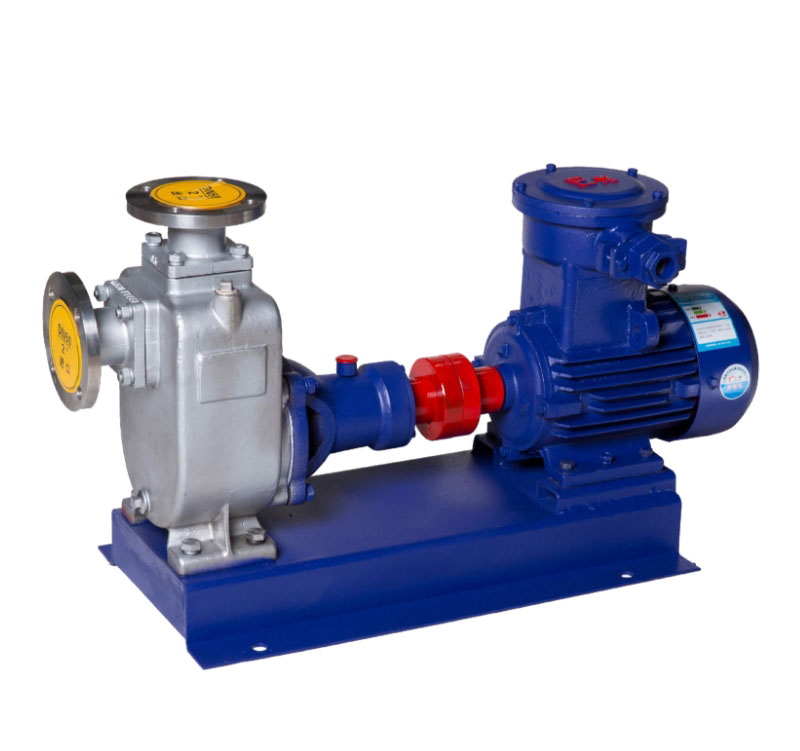
ZX / ZXL Self-priming Centrifugal Pump

ZX / ZXL Self-priming Centrifugal Pump

型号意义   Product Introduction ZX Self-Priming Centrifugal Clean Water Pump belongs to the self-priming centrif...

Product Description

型号意义

ZX ZXL Self priming Centrifugal Pump type 1


Product Introduction

ZX Self-Priming Centrifugal Clean Water Pump belongs to the self-priming centrifugal pump series. It features a compact structure, easy operation, smooth running, convenient maintenance, high efficiency, long service life, and strong self-priming performance. No bottom valve is required in the pipeline. Before starting, only a certain amount of priming liquid needs to be kept inside the pump body. This simplifies the pipeline system and improves working conditions.

Applications

1. Suitable for municipal environmental protection, construction, firefighting, chemical industry, pharmaceuticals, dyes, printing & dyeing, brewing, electric power, electroplating, papermaking, petroleum, mining, equipment cooling, and oil-tanker unloading. 2. Applicable for clean water, seawater, liquids with mild acidity/alkalinity, and general slurry (viscosity ≤100 cP, solid content ≤30%). 3. When equipped with a rocker-type spray head, it can atomize water into fine droplets for irrigation—ideal for farms, nurseries, orchards, and tea plantations. 4. Can be paired with filter presses of any model/specification for slurry feeding—an ideal matching pump.

Operating Conditions

ZX self-priming centrifugal pumps adopt an axial-recirculation pump body design. The pump body consists of the suction chamber, priming chamber, volute chamber, recirculation port, and air-liquid separation chamber. After starting, the impeller draws the stored liquid and the air in the suction pipeline, fully mixing them. Under centrifugal force, the liquid carrying air moves to the volute’s outer edge, forming a white foam belt and a fast-rotating liquid ring. The air-liquid mixture passes through the diffuser into the separation chamber. As the flow velocity drops suddenly, the lighter air separates and is discharged through the outlet. The degassed liquid returns to the priming chamber and re-enters the impeller to mix with incoming gas. This cycle continues until all air in the suction line is removed, completing the self-priming process.

Some pump bearing housings include a cooling chamber. When heating causes the bearing temperature to exceed 70°C, cooling liquid can be injected through either cooling-pipe connector for circulation cooling.
The sealing mechanism preventing leakage from high-pressure to low-pressure zones consists of front and rear wear rings. The front ring is installed on the pump body, and the rear ring on the bearing housing. When wear affects pump efficiency or self-priming performance, the rings should be replaced.

Structural Diagram

ZX ZXL Self priming Centrifugal Pump type jiegoutu

1 Coupling 2 Pump Shaft 3 Bearing 4 Mechanical Seal 5 Bearing Housing 6 Pump Casing 7 Outlet Seat
8 Inlet Seat 9 Front Wear Ring 10 Impeller 11 Rear Cover 12 Water-Blocking Ring 13 Filling Port 14 Recirculation Port


Performance Parameters

Model
Inlet
Outlet
Suction Lift
Motor Power
Flow Rate
Head
(mm)
(mm)
(m)
(kW)
(L/min)
(m)
25ZX3.2-20
25
25
6.5
0.75
3.2
20
25ZX3.2-32
25
25
6.5
1.1
3.2
32
40ZX6.3-20
40
32
6.5
1.1
6.3
20
40ZX10-40
40
40
6.5
4
10
40
50ZX15-12
50
50
6.5
1.5
15
12
50ZX18-20
50
50
6.5
2.2
18
20
50ZX12.5-32
50
50
6.5
3
12.5
32
50ZX20-30
50
50
6.5
4
20
30
50ZX14-35
50
50
6.5
4
14
35
50ZX10-40
50
50
6.5
4
10
40
50ZX12.5-50
50
50
6.5
5.5
12.5
50
50ZX15-60
50
50
6.5
7.5
15
60
50ZX20-75
50
50
6.5
11
20
75
Model
Inlet
Outlet
Suction Lift
Motor Power
Flow Rate
Head
(mm)
(mm)
(m)
(kW)
(L/min)
(m)
65ZX30-15
65
50
6.5
3
30
15
65ZX25-32
65
50
6
5.5
25
32
80ZX35-13
80
80
6
2.2
35
13
80ZX43-17
80
80
6
4
43
17
80ZX40-22
80
80
6
5.5
40
22
80ZX50-25
80
80
6
7.5
50
25
80ZX50-32
80
80
6
7.5
50
32
80ZX60-55
80
80
6
18.5
60
55
80ZX60-70
80
80
6
22
60
70
100ZX100-20
100
80
6
11
100
20
100ZX100-40
100
100
6
18.5
100
40
100ZX100-65
100
100
6
30
100
65
100ZX70-75
100
100
6
30
70
75
Model
Inlet
Outlet
Suction Lift
Motor Power
Flow Rate
Head
(mm)
(mm)
(m)
(kW)
(L/min)
(m)
150ZX170-55
150
150
5
45
170
55
150ZX170-65
150
150
5
55
170
65
150ZX160-80
150
150
5
55
160
80
200ZX400-32
200
200
5
55
400
32
200ZX280-63
200
200
5
90
280
63
200ZX350-65
200
200
5
110
350
65
250ZX550-32
250
250
5
75
550
32
250ZX400-50
250
250
5
90
400
50
250ZX450-55
250
250
5
110
450
55
250ZX400-75
250
250
5
132
400
75
300ZX600-32
300
300
5
90
600
32
300ZX500-50
300
300
5
110
500
50
300ZX550-55
300
300
5
132
550
55

Installation

  1. When the pump and motor are directly coupled, pay attention to the concentricity between the pump shaft and the motor output shaft. Correct installation has a major impact on smooth operation and service life, so alignment must be carried out carefully and accurately.
  2. The pump coupling must be tightened with bolts and the nuts locked. Loose nuts can cause axial movement of the impeller and lead to mechanical failures.
  3. To maintain a certain amount of liquid in the pump casing for good self-priming performance and to prevent dry running of the mechanical seal, the pump inlet should be installed above the pump shaft centerline.
  4. For the installation of the suction pipeline:
    • A. The installation height of the suction inlet should not exceed 3.5 m. Where conditions allow, the suction inlet should be installed as low as possible below the minimum liquid level in the sump, and the suction line should be kept as short as possible with fewer elbows. This helps shorten self-priming time and improve self-priming performance.
    • B. Valves, flanges and other fittings in the suction line must be strictly leak-free. Air leakage in the suction line is not allowed.
    • C. Solid particles and debris must be prevented from entering the pump. A strainer should be installed on the suction pipeline. The effective open area of the strainer should be 2–3 times the cross-sectional area of the suction pipe, and the strainer should be inspected and cleaned regularly.
    • D. The suction and discharge pipelines must be supported by their own pipe supports. The pump casing must not bear the weight or stress of the pipelines.
  5. During installation, the static grounding resistance of the pump and pipelines must meet the specified requirements.
  6. Check carefully that the static grounding resistance of the pump casing and pipelines meets the specified requirements.
  7. Align the coupling between the pump and the motor and check the installation clearance and concentricity. The allowable misalignment is within 0.1 mm. The height difference between the pump shaft and the motor shaft can be adjusted by adding shims under the base.
  8. After the unit has actually run for 3–4 hours, perform a final inspection. If there are no abnormal phenomena, the installation is considered correct. During trial operation, check the bearing temperature; the bearing housing temperature should not exceed 70 °C.
  9. For pump bearing housings equipped with a cooling chamber, the cooling water connectors are designed for rubber or plastic hoses with an inner diameter of 12 mm, and the thread size is M12×1.25.
  10. If a check valve is installed on the discharge pipeline and air cannot be discharged smoothly during self-priming, a small vent pipe and valve should be added at the pump outlet to exhaust air.

Operation

(I) Preparation and inspection before start-up

  1. This series of self-priming pumps uses high-quality calcium-based grease or No.10 machine oil for lubrication, depending on the operating conditions. For pumps using grease lubrication, regularly add grease to the bearing housing. For pumps using oil lubrication, top up the oil if the level is insufficient.
  2. Check whether the liquid level inside the pump casing is higher than the upper edge of the impeller. If not, fill the pump casing directly through the filling port. The pump must not be started with insufficient liquid, otherwise it will not work properly and the mechanical seal may be damaged.
  3. Check whether any rotating parts of the pump are rubbing or jamming.
  4. Check whether the nuts on the pump base and all connection points are loose.
  5. Check the concentricity and parallelism between the pump shaft and the motor shaft.
  6. Check whether there is any air leakage in the suction pipeline. If leakage is found, it must be eliminated.
  7. Open the suction valve, and slightly open (do not fully open) the discharge control valve.

(II) Start-up and running

  1. Jog the motor to check whether the pump shaft rotates in the correct direction.
  2. Pay attention to any abnormal noise or vibration during rotation.
  3. Observe the readings of the pressure gauge and vacuum gauge. After start-up, when the readings fluctuate for a period of time and then stabilize, it indicates that the pump has been fully primed and has entered normal conveying operation.
  4. During self-priming, pay special attention to the water temperature in the pump. If the self-priming time is too long, the water temperature may become too high. In this case, stop the pump and check for the cause.
  5. If a high liquid temperature in the pump causes difficulty in self-priming, stop the pump temporarily and let liquid in the discharge pipeline flow back into the pump, or add liquid directly through the filling port to reduce the temperature, then restart the pump.
  6. If severe vibration and noise occur during operation, cavitation may be happening. Cavitation is usually caused by excessive suction flow velocity or excessive suction lift. When the flow velocity is too high, adjust the discharge control valve to increase the pressure at the pump outlet. If there is blockage in the suction pipeline, remove it in time. If the suction lift is too high, lower the installation height of the pump appropriately.
  7. If the pump is stopped during operation and needs to be restarted, slightly open (do not fully close) the discharge control valve before start-up. This helps exhaust air during self-priming and allows the pump to start under a lighter load.

(III) Pump shutdown

  1. First close the gate valve on the discharge pipeline.
  2. Stop the pump.
  3. In cold seasons, drain the liquid from the pump casing and the cooling chamber in the bearing housing to prevent damage caused by freezing.


OEM & Custom Solutions

We offer OEM/ODM manufacturing including material selection (cast iron or stainless steel), voltage (220V/380V/415V), and flange standards (DIN, ANSI, JIS). Optional control panels, baseplates, and explosion-proof motors are available. All pumps are ISO9001 and CE certified for global export.

FAQs for Oversea Buyers

Q: What is the difference between ZX and ZXL models?
A: ZX uses cast iron for clean water, while ZXL uses stainless steel for light corrosive liquids.

Q: What’s the maximum suction height?
A: Up to 6 meters under proper installation and sealing conditions.

Q: Can the pump handle corrosive media?
A: Yes, ZXL models with stainless steel construction can handle weak acids or alkalis.

Q: What’s the maximum temperature?
A: 80°C for standard models; special configurations available on request.

Q: Is the pump suitable for firefighting systems?
A: Yes, it can be used for firefighting water supply and emergency systems.

Q: Do you offer OEM branding?
A: Yes, private labeling and packaging customization are available for export clients.

Q: What certifications are provided?
A: All SEAPUMP products are ISO9001 and CE certified to meet international standards.